
Comprehensive Guide to Fluticasone Furoate: Uses, Dosage, Side Effects, and More
What is Fluticasone Furoate?
Overview of Fluticasone Furoate
Generic Name: Fluticasone furoate
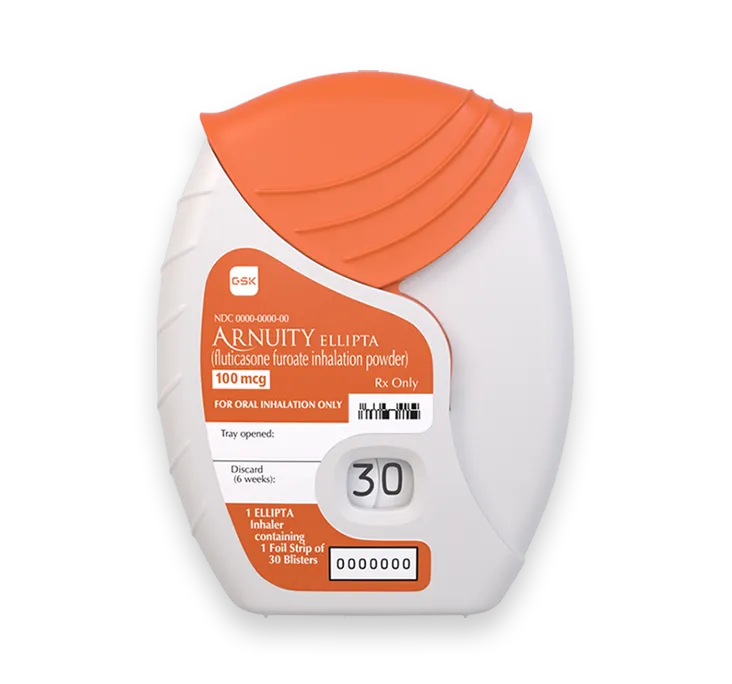
Brand Name: Arnuity Ellipta (asthma), Avamys (nasal spray), Flonase Sensimist (allergic rhinitis), Breo Ellipta (with vilanterol), Trelegy Ellipta (with umeclidinium/vilanterol)
Drug Group: Inhaled/nasal corticosteroid
Commonly Used For
This medication is used to:
- Treat allergic rhinitis.
- Manage asthma.
- Control COPD symptoms.
Key Characteristics
Form: Nasal spray (27.5 mcg/spray), dry powder inhaler (50, 100, 200 mcg/dose), combination inhalers (detailed in Dosage section).
Mechanism: Binds to glucocorticoid receptors, inhibiting inflammatory mediators.
Approval: FDA-approved (2007 for Veramyst, later reformulated) and EMA-approved for asthma and rhinitis.
Indications and Uses of Fluticasone Furoate
Fluticasone furoate is indicated for respiratory and allergic conditions, leveraging its high potency and prolonged receptor binding:
Seasonal Allergic Rhinitis (SAR): Treats nasal symptoms (sneezing, congestion, rhinorrhea) in adults and children (2+ years), reducing symptom scores by 40–50% in clinical trials.
Perennial Allergic Rhinitis (PAR): Manages year-round allergies, improving quality of life, supported by long-term studies.
Asthma (Maintenance): Controls persistent asthma in patients 5+ years (Arnuity Ellipta), reducing exacerbations by 30–40%, per GINA guidelines.
COPD Maintenance: Used in Breo Ellipta (with vilanterol) to reduce COPD exacerbations and improve lung function (FEV1), approved for adults.
Nasal Polyps: Employed off-label to reduce polyp size and nasal obstruction, with endoscopic improvement, under ENT supervision.
Eosinophilic Esophagitis (EoE): Investigated off-label via swallowed inhalation powder to reduce esophageal inflammation, with emerging gastroenterology data.
Chronic Rhinosinusitis with Nasal Polyps (CRSwNP): Used off-label in combination therapy to manage recurrent polyps, supported by rhinology research.
Post-Nasal Drip Syndrome: Managed off-label to alleviate throat irritation and cough, improving sleep quality.
Pediatric Allergic Rhinitis: Treats SAR/PAR in children (2–11 years) with age-appropriate dosing, enhancing school performance.
Asthma-COPD Overlap (ACO): Utilized off-label in patients with features of both conditions, optimizing lung function, with pulmonology consensus.
Dosage of Fluticasone Furoate
Dosage for Adults
Allergic Rhinitis (Nasal Spray):
- Initial: 110 mcg (2 sprays/nostril) once daily.
- Maintenance: 55 mcg (1 spray/nostril) once daily if controlled.
Asthma (Arnuity Ellipta): 100–200 mcg once daily, inhaled via DPI, based on prior therapy.
COPD (Breo Ellipta): 100 mcg fluticasone furoate + 25 mcg vilanterol once daily.
Dosage for Children
Allergic Rhinitis (2–11 years): 55 mcg (1 spray/nostril) once daily; maximum 110 mcg if needed.
Asthma (5–11 years, Arnuity Ellipta): 50 mcg once daily, under pediatric pulmonologist supervision.
Not recommended under 2 years (nasal) or 5 years (inhaled).
Dosage for Pregnant Women
Pregnancy Category C: Use only if benefits outweigh risks (e.g., severe asthma). Consult an obstetrician, with fetal growth monitoring.
Dosage Adjustments
Renal Impairment: No adjustment needed.
Hepatic Impairment: Mild/Moderate: No adjustment; Severe (Child-Pugh C): Use lowest effective dose; monitor closely.
Elderly: Start with 55 mcg (nasal) or 100 mcg (inhaled); titrate slowly.
Concomitant CYP3A4 Inhibitors: Reduce dose (e.g., ketoconazole); monitor for systemic effects.
Additional Considerations
- Administer this active ingredient once daily, preferably in the morning.
- Prime nasal spray before first use; shake well.
How to Use Fluticasone Furoate
Administration:
- Nasal Spray: Blow nose, tilt head forward, insert nozzle, spray while breathing in; avoid eyes.
- Inhaler (DPI): Exhale fully, inhale deeply through mouthpiece, hold breath 10 seconds; rinse mouth after.
Timing: Use once daily, at the same time, for consistency.
Monitoring: Watch for nosebleeds, throat irritation, or vision changes.
Additional Tips:
- Store at 20–25°C (68–77°F), protecting from moisture and freezing.
- Keep out of reach of children due to overdose risk.
- Report persistent nasal crusting, white patches, or signs of infection immediately.
Contraindications for Fluticasone Furoate
This drug is contraindicated in:
Hypersensitivity: Patients with a known allergy to Fluticasone furoate or milk proteins (in DPI).
Status Asthmaticus: Not for acute bronchospasm.
Untreated Nasal Infections: Avoid in active fungal/bacterial infections.
Recent Nasal Surgery/Trauma: Delay until healing.
Warnings & Precautions for Fluticasone Furoate
General Warnings
Adrenal Suppression: Risk with high doses/long-term use; monitor growth in children.
Nasal Septal Perforation: Rare; inspect nasal mucosa periodically.
Cataracts/Glaucoma: Increased risk; screen eyes annually.
Immunosuppression: Risk of infections (e.g., candida); use prophylaxis if needed.
Hypothalamic-Pituitary-Adrenal (HPA) Axis Suppression: Taper slowly if discontinuing.
Additional Warnings
Bone Density Loss: Risk with prolonged use; assess in postmenopausal women.
Hypercorticism: Cushingoid features with excessive dose; monitor weight.
Psychiatric Effects: Rare mood changes; monitor in predisposed patients.
Eosinophilic Conditions: Paradoxical worsening in Churg-Strauss; discontinue if occurs.
Hypersensitivity Reactions: Rare anaphylaxis; discontinue if swelling occurs.
Use in Specific Populations
Pregnancy: Category C; use only if essential with fetal monitoring.
Breastfeeding: Excreted in breast milk; monitor infant growth.
Elderly: Higher risk of systemic effects; start with lower doses.
Children: Monitor growth velocity; use lowest effective dose.
Renal/Hepatic Impairment: Adjust in severe cases.
Additional Precautions
- Inform your doctor about eye issues, infections, or recent surgery before starting this medication.
- Avoid abrupt cessation; taper under supervision.
Overdose and Management of Fluticasone Furoate
Overdose Symptoms
- Nasal irritation, headache, or throat pain.
- Severe cases: Adrenal crisis, Cushing’s syndrome, or vision loss.
- Nosebleeds, dry mouth as early signs.
- Osteoporosis with chronic overuse.
Immediate Actions
Contact the Medical Team: Seek immediate medical help.
Supportive Care: Discontinue use, monitor vital signs, and provide symptomatic relief.
Specific Treatment: Administer stress-dose steroids if adrenal insufficiency; no antidote.
Monitor: Check cortisol levels, bone density, and eye pressure for 1–3 months.
Additional Notes
- Overdose risk is low with topical use; store securely.
- Report persistent symptoms (e.g., weight gain, vision blur) promptly.
Side Effects of Fluticasone Furoate
Common Side Effects
- Nasal Irritation (5–15%, transient)
- Headache (4–12%, relieved with rest)
- Nosebleeds (3–10%, reduced with proper technique)
- Throat Irritation (2–8%, rinse mouth)
- Cough (1–6%, decreases with tolerance)
These effects may subside with dose adjustment.
Serious Side Effects
Seek immediate medical attention for:
- Ocular: Cataracts, glaucoma, or blurred vision.
- Endocrine: Adrenal suppression or growth retardation.
- Nasal: Septal perforation or crusting.
- Infectious: Oral thrush or pneumonia (in COPD).
- Allergic: Rash, angioedema, or anaphylaxis.
Additional Notes
- Regular monitoring for growth (children), eye health, and bone density is advised.
- Report any unusual symptoms (e.g., white patches, severe nose pain) immediately to a healthcare provider.
Drug Interactions with Fluticasone Furoate
This active ingredient may interact with:
- CYP3A4 Inhibitors: Increases systemic exposure (e.g., ritonavir, ketoconazole); reduce dose.
- Other Steroids: Enhances adrenal suppression; avoid combinations.
- Live Vaccines: Reduces immune response; delay vaccination.
- Diuretics: Increases hypokalemia risk; monitor electrolytes.
- Anticholinergics: Enhances dry mouth (in combination inhalers).
Action: Provide your healthcare provider with a complete list of medications.
Patient Education or Lifestyle
Medication Adherence: Take this corticosteroid as prescribed, following the exact technique.
Monitoring: Report nosebleeds, vision changes, or growth concerns immediately.
Lifestyle: Avoid allergens; use air purifiers.
Diet: Take with or without food; maintain calcium/vitamin D intake.
Emergency Awareness: Know signs of adrenal crisis or infection; seek care if present.
Follow-Up: Schedule regular check-ups every 3–6 months to monitor lung function, nasal health, and growth.
Pharmacokinetics
Absorption: Minimal systemic (nasal <1%, inhaled <2%); peak at 0.5–2 hours.
Distribution: Volume of distribution ~600 L; 99% protein-bound.
Metabolism: Hepatic via CYP3A4 to inactive 17β-carboxylic acid.
Excretion: Primarily fecal (90%) as metabolites; half-life 15–24 hours.
Half-Life: 15–24 hours, supporting once-daily dosing.
Pharmacodynamics
This drug exerts its effects by:
Binding to glucocorticoid receptors with high affinity (30x fluticasone propionate).
Inhibiting cytokines, chemokines, and inflammatory cells.
Reducing airway hyperresponsiveness and nasal congestion.
Exhibiting dose-dependent risks of HPA suppression and local irritation.
Storage
Temperature: Store at 20–25°C (68–77°F); protect from moisture.
Protection: Keep in original foil pouch (inhaler), away from light.
Safety: Store out of reach of children due to overdose risk.
Disposal: Dispose of unused devices per local regulations or consult a pharmacist.
Frequently Asked Questions (FAQs)
Q: What does Fluticasone furoate treat?
A: This medication treats allergic rhinitis, asthma, and COPD.
Q: Can this active ingredient cause nosebleeds?
A: Yes, nosebleeds may occur; use proper technique.
Q: Is Fluticasone furoate safe for children?
A: Yes, for 2+ years (nasal) or 5+ years (inhaled) with a doctor’s guidance.
Q: How is this drug taken?
A: Via nasal spray or inhaler, once daily, as directed.
Q: How long is Fluticasone furoate treatment?
A: Long-term for chronic conditions with monitoring.
Q: Can I use Fluticasone furoate if pregnant?
A: Yes, with caution; consult a doctor.
Regulatory Information
This medication is approved by:
U.S. Food and Drug Administration (FDA): Approved in 2007 (Veramyst), later as Arnuity, Breo, Trelegy.
European Medicines Agency (EMA): Approved for asthma, rhinitis, and COPD.
Other Agencies: Approved globally for respiratory use; consult local guidelines.
References
- U.S. Food and Drug Administration (FDA). (2023). Arnuity Ellipta (Fluticasone Furoate) Prescribing Information.
- Official FDA documentation detailing the drug’s approved uses, dosage, and safety.
- European Medicines Agency (EMA). (2023). Fluticasone Furoate Summary of Product Characteristics.
- EMA’s comprehensive information on the medication’s indications and precautions in Europe.
- National Institutes of Health (NIH). (2023). Fluticasone Furoate: MedlinePlus Drug Information.
- NIH resource providing detailed information on the drug’s uses, side effects, and precautions.
- World Health Organization (WHO). (2023). WHO Model List of Essential Medicines: Fluticasone.
- WHO’s inclusion of inhaled corticosteroids.
- Journal of Allergy and Clinical Immunology. (2022). Fluticasone Furoate in Allergic Rhinitis.
- Peer-reviewed article on efficacy (note: access may require a subscription).
