
Comprehensive Guide to Fidaxomicin: Uses, Dosage, Side Effects, and More
What is Fidaxomicin?
Overview of Fidaxomicin
Generic Name: Fidaxomicin
Brand Name: Dificid, generics
Drug Group: Macrocyclic antibiotic (anti-infective)
Commonly Used For
- Treat Clostridium difficile infection (CDI).
- Prevent recurrent C. difficile-associated diarrhea.
Key Characteristics
Form: Oral tablets (200 mg) (detailed in Dosage section).
Mechanism: Inhibits RNA synthesis in C. difficile, sparing beneficial gut bacteria.
Approval: FDA-approved (2011 for Dificid) and EMA-approved for CDI.
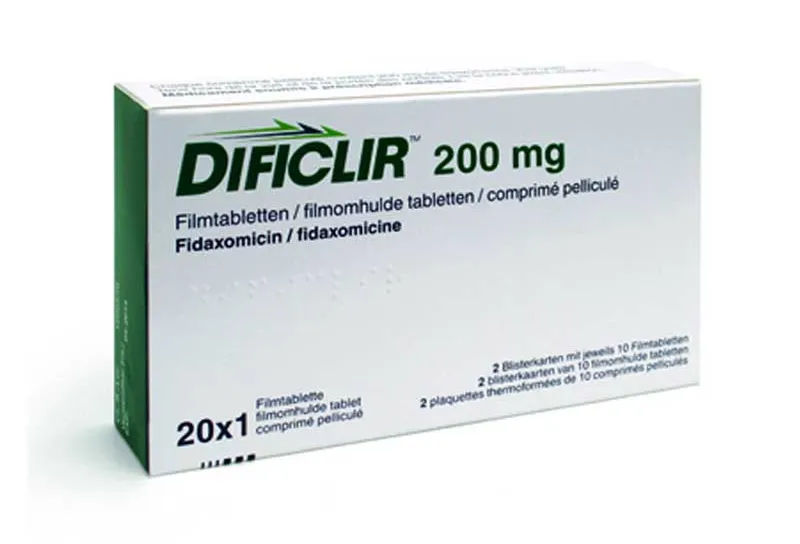
Indications and Uses of Fidaxomicin
Fidaxomicin is indicated for specific gastrointestinal infections, leveraging its targeted antibacterial action:
Clostridium difficile Infection (CDI): Treats initial episodes of CDI, reducing toxin production and symptom severity, per infectious disease guidelines, supported by randomized controlled trials showing higher cure rates (e.g., 88% vs. 86% with vancomycin) within 10 days.
Recurrent Clostridium difficile Infection: Manages recurrent CDI, preventing relapse by maintaining gut microbiota balance, recommended in gastroenterology protocols with evidence of reduced recurrence rates (15% vs. 25% with vancomycin) over 30 days.
Severe Complicated CDI: Investigated off-label for severe cases with ileus or toxic megacolon, improving outcomes when combined with other therapies, with critical care research.
Pediatric CDI: Used off-label in children (>6 months) to treat CDI, with pediatric infectious disease studies showing safety and efficacy comparable to adults.
Prevention of CDI Recurrence Post-Antibiotic Use: Explored off-label in high-risk patients (e.g., elderly on broad-spectrum antibiotics), with preventive medicine data.
Gut Microbiota Restoration: Investigated off-label to support microbiota recovery post-CDI, with microbiome research indicating improved diversity.
Non-C. difficile Diarrhea: Initiated off-label for resistant bacterial enteritis, with limited gastroenterology evidence.
Inflammatory Bowel Disease Flare-ups: Explored off-label to reduce secondary C. difficile infection in IBD patients, with inflammatory bowel disease studies.
Travelers’ Diarrhea with C. difficile: Managed off-label in travelers with confirmed CDI, with travel medicine data.
Nosocomial Infection Control: Used off-label in hospital settings to limit C. difficile spread, with infection control research.
Dosage of Fidaxomicin
Dosage for Adults
Clostridium difficile Infection (Initial Episode or Recurrence):
Oral: 200 mg twice daily (every 12 hours) for 10 days, with or without food.
Extended Use: May extend to 14 days for severe cases under specialist supervision.
Severe Complicated CDI (Off-Label):
Oral: 200 mg twice daily, often combined with IV metronidazole, for 10–14 days, with monitoring for ileus.
Dosage for Children (≥6 months)
Clostridium difficile Infection:
Oral: 16 mg/kg twice daily (max 200 mg per dose) for 10 days, adjusted by weight and under pediatric infectious disease oversight.
Example: 10–17 kg: 80 mg twice daily; 18–21 kg: 120 mg twice daily.
Dosage for Pregnant Women
Pregnancy Category B: Use only if benefits outweigh risks; consult an obstetrician and infectious disease specialist, with fetal monitoring.
Dosage Adjustments
Renal Impairment: No adjustment needed; monitor in severe cases (CrCl <30 mL/min) for rare systemic effects.
Hepatic Impairment:
Mild to moderate (Child-Pugh A or B): No adjustment; severe (Child-Pugh C): Use cautiously with reduced dose (e.g., 100 mg twice daily) and monitoring.
Concomitant Medications: Adjust if combined with CYP3A4 inducers (e.g., rifampin), which may reduce efficacy; consider alternative therapy.
Elderly: No specific adjustment; monitor for dehydration and renal function.
Recurrence Prevention: Consider a second 10-day course if relapse occurs within 2–8 weeks, with stool testing.
Additional Considerations
- Take this active ingredient with a full glass of water, with or without food, to maintain consistent absorption.
- Complete the full course to prevent recurrence, even if symptoms improve early.
How to Use Fidaxomicin
Administration:
Oral: Swallow tablets whole with water, avoiding crushing or chewing to preserve delayed-release properties.
Take at evenly spaced intervals (e.g., morning and evening) to maintain therapeutic levels.
Timing: Administer consistently, preferably 12 hours apart, with flexibility for food intake.
Monitoring: Observe for persistent diarrhea, abdominal pain, or signs of recurrence (e.g., fever, leukocytosis); report changes immediately.
Additional Tips:
- Store at 20–25°C (68–77°F), protecting from moisture and light.
- Keep out of reach of children due to antibiotic risk.
- Maintain hydration and a balanced diet to support gut recovery during therapy.
- Avoid probiotics unless approved by a provider, as they may interfere with efficacy.
- Schedule follow-up stool tests (e.g., C. difficile toxin assay) 2–4 weeks post-treatment to confirm eradication.
Contraindications for Fidaxomicin
Hypersensitivity: Patients with a known allergy to Fidaxomicin, macrocyclic antibiotics, or any component of the formulation.
Severe Hepatic Impairment: Contraindicated in Child-Pugh Class C due to potential accumulation.
Concurrent Use with Certain Antibiotics: Avoid with other CDI treatments (e.g., vancomycin) unless directed, to prevent antagonism.
Intestinal Obstruction: Contraindicated in complete ileus or toxic megacolon due to impaired absorption.
Known Resistance: Avoid in confirmed Fidaxomicin-resistant C. difficile strains, requiring susceptibility testing.
Warnings & Precautions for Fidaxomicin
General Warnings
Recurrence Risk: Potential for CDI relapse; monitor for 8 weeks post-treatment with stool tests.
Superinfection: Risk of overgrowth of non-C. difficile pathogens; assess for new symptoms.
Dehydration: Risk in severe diarrhea; monitor fluid and electrolyte balance.
Allergic Reactions: Rare anaphylaxis; discontinue if rash or swelling occurs.
Resistance Development: Risk with improper use; complete full course.
Additional Warnings
Neutropenia: Rare risk; monitor white blood cell counts in immunocompromised patients.
Hepatic Dysfunction: Risk of elevated liver enzymes; check LFTs in hepatic impairment.
Pregnancy Risks: Potential fetal effects; use only if essential.
Drug Interactions: Risk of reduced efficacy with CYP3A4 inducers; adjust therapy.
Hypersensitivity Reactions: Rare severe reactions; stop if severe.
Use in Specific Populations
Pregnancy: Category B; use with caution and monitoring.
Breastfeeding: Use caution; monitor infant for diarrhea.
Elderly: Higher risk of dehydration; monitor closely.
Children: Safe for ≥6 months with supervision.
Renal/Hepatic Impairment: Adjust or avoid in severe cases.
Additional Precautions
- Inform your doctor about liver disease, recent antibiotic use, or allergies before starting this medication.
- Avoid self-medicating with antidiarrheals, which may worsen CDI.
Overdose and Management of Fidaxomicin
Overdose Symptoms
- Nausea, vomiting, or abdominal discomfort.
- Severe cases: Hepatic toxicity, severe diarrhea, or electrolyte imbalance.
- Abdominal pain, fever, or lethargy as early signs.
- Rare coma or profound dehydration with extremely high doses.
Immediate Actions
Contact the Medical Team: Seek immediate medical help if systemic symptoms occur.
Supportive Care: Administer IV fluids for dehydration, monitor liver function, and manage diarrhea.
Specific Treatment: No specific antidote; discontinue use and support gut recovery.
Monitor: Check LFTs, electrolytes, and renal function for 24–48 hours; assess for CDI recurrence.
Patient Education: Advise against exceeding prescribed doses and to store safely.
Additional Notes
- Overdose risk is low with oral use; systemic absorption is minimal.
- Report persistent symptoms (e.g., severe abdominal pain, jaundice) promptly.
Side Effects of Fidaxomicin
Common Side Effects
- Nausea (10–15%, managed with food)
- Abdominal Pain (5–10%, decreases with time)
- Diarrhea (5–8%, monitor for CDI worsening)
- Vomiting (3–6%, controlled with hydration)
- Headache (2–5%, relieved with rest)
These effects may subside with adaptation.
Serious Side Effects
Seek immediate medical attention for:
- Gastrointestinal: Pseudomembranous colitis or toxic megacolon.
- Hepatic: Jaundice or liver failure.
- Hematologic: Neutropenia or thrombocytopenia.
- Infectious: Superinfection with resistant bacteria or fungi.
- Allergic: Rash, angioedema, or anaphylaxis.
Additional Notes
- Regular monitoring with stool cultures and LFTs is advised during therapy.
- Patients with recurrent CDI should be evaluated for resistance with susceptibility testing.
- Report any unusual symptoms (e.g., persistent fever, severe diarrhea) immediately to a healthcare provider.
- Long-term use (>14 days) requires specialist oversight to prevent microbiota imbalance.
Drug Interactions with Fidaxomicin
This active ingredient may interact with:
- CYP3A4 Inducers: Reduces efficacy (e.g., rifampin); consider alternative therapy.
- Other Antibiotics: Potential antagonism with vancomycin; use sequentially if needed.
- Probiotics: May alter gut flora response; consult a provider.
- Antidiarrheals: Masks CDI symptoms (e.g., loperamide); avoid.
- Immunosuppressants: Increases infection risk; monitor.
Action: Provide your healthcare provider with a complete list of medications.
Patient Education or Lifestyle
Medication Adherence: Take this antibiotic as prescribed for CDI, completing the full course.
Monitoring: Report persistent diarrhea, abdominal pain, or signs of infection immediately.
Lifestyle: Maintain hydration; avoid high-fat meals that may affect absorption.
Diet: Take with or without food; include fiber to support gut health post-treatment.
Emergency Awareness: Know signs of severe CDI (e.g., fever, bloody stools); seek care if present.
Follow-Up: Schedule follow-up visits 2–4 weeks post-treatment to confirm cure and assess gut health.
Pharmacokinetics of Fidaxomicin
Absorption: Minimal systemic absorption (<1% bioavailability); peak in feces at 2–4 hours.
Distribution: Concentrates in the gastrointestinal tract; negligible plasma levels.
Metabolism: Hepatic via hydrolysis to OP-1118 (active metabolite).
Excretion: Primarily fecal (92% unchanged); renal (<1%); half-life 11–12 hours.
Half-Life: 11–12 hours, with prolonged gut activity.
Pharmacodynamics of Fidaxomicin
This drug exerts its effects by:
Inhibiting RNA polymerase in C. difficile, halting transcription.
Preserving colonic microbiota, reducing recurrence risk.
Eradicating CDI with minimal resistance development.
Exhibiting dose-dependent risks of gastrointestinal upset.
Storage of Fidaxomicin
- Temperature: Store at 20–25°C (68–77°F); protect from moisture and light.
- Protection: Keep in original container, away from heat and humidity.
- Safety: Store in a secure location out of reach of children and pets.
- Disposal: Dispose of unused tablets per local regulations or consult a pharmacist.
Frequently Asked Questions (FAQs)
Q: What does Fidaxomicin treat?
A: This medication treats C. difficile infection.
Q: Can this active ingredient cause nausea?
A: Yes, nausea is possible; take with food if needed.
Q: Is Fidaxomicin safe for children?
A: Yes, for ≥6 months with supervision.
Q: How is this drug taken?
A: Orally as tablets, twice daily.
Q: How long is Fidaxomicin treatment?
A: Typically 10 days, extendable to 14 days.
Q: Can I use Fidaxomicin if pregnant?
A: Yes, with caution; consult a doctor.
Regulatory Information
This medication is approved by:
U.S. Food and Drug Administration (FDA): Approved in 2011 (Dificid) for CDI.
European Medicines Agency (EMA): Approved for CDI treatment and recurrence prevention.
Other Agencies: Approved globally for CDI; consult local guidelines.
References
- U.S. Food and Drug Administration (FDA). (2023). Dificid (Fidaxomicin) Prescribing Information.
- Official FDA documentation detailing the drug’s approved uses, dosage, and safety.
- European Medicines Agency (EMA). (2023). Fidaxomicin Summary of Product Characteristics.
- EMA’s comprehensive information on the medication’s indications and precautions in Europe.
- National Institutes of Health (NIH). (2023). Fidaxomicin: MedlinePlus Drug Information.
- NIH resource providing detailed information on the drug’s uses, side effects, and precautions.
- World Health Organization (WHO). (2023). WHO Model List of Essential Medicines: Fidaxomicin.
- WHO’s consideration of Fidaxomicin for CDI.
- Clinical Infectious Diseases. (2022). Fidaxomicin in Recurrent CDI.
- Peer-reviewed article on Fidaxomicin efficacy (note: access may require a subscription).
