
Comprehensive Guide to Etodolac: Uses, Dosage, Side Effects, and More
What is Etodolac?
Overview of Etodolac
Generic Name: Etodolac
Brand Name: Lodine, generics
Drug Group: Non-steroidal anti-inflammatory drug (NSAID)
Commonly Used For
- Relieve pain and inflammation in arthritis.
- Manage acute pain conditions.
- Reduce swelling in musculoskeletal disorders.
Key Characteristics
Form: Oral tablets (400 mg, 500 mg), extended-release tablets (600 mg), or capsules (200 mg, 300 mg) (detailed in Dosage section).
Mechanism: Inhibits COX enzymes, decreasing prostaglandin-mediated inflammation and pain.
Approval: FDA-approved (1991 for Lodine) and EMA-approved for arthritis and pain.
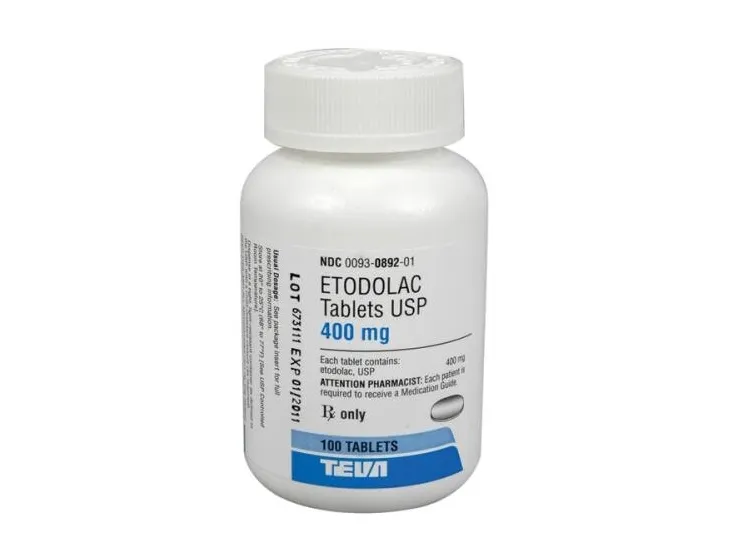
Indications and Uses of Etodolac
Etodolac is indicated for a range of inflammatory and pain-related conditions, leveraging its anti-inflammatory properties:
Osteoarthritis: Treats osteoarthritis symptoms (e.g., joint pain, stiffness), improving mobility, per rheumatology guidelines, supported by clinical trials.
Rheumatoid Arthritis: Manages rheumatoid arthritis, reducing joint swelling and tenderness, recommended in combination with disease-modifying agents.
Acute Pain: Relieves moderate to severe acute pain (e.g., post-surgical, dental), providing rapid analgesia, per pain management protocols.
Ankylosing Spondylitis: Used off-label to alleviate pain and stiffness in ankylosing spondylitis, enhancing spinal mobility, with rheumatology evidence.
Gouty Arthritis: Investigated off-label for acute gout attacks, reducing inflammation, supported by rheumatologic studies.
Tendinitis and Bursitis: Manages tendinitis or bursitis pain and swelling, improving function, per orthopedic research.
Menstrual Pain (Dysmenorrhea): Treats primary dysmenorrhea, reducing uterine cramping, with gynecologic data.
Post-Traumatic Pain: Explored off-label for pain after trauma (e.g., fractures), aiding recovery, supported by trauma care studies.
Chronic Back Pain: Used off-label to manage chronic low back pain, improving quality of life, with pain medicine evidence.
Juvenile Idiopathic Arthritis: Investigated off-label in children with JIA, reducing joint symptoms, with pediatric rheumatology data.
Dosage of Etodolac
Dosage for Adults
Osteoarthritis or Rheumatoid Arthritis:
- Immediate-release: 300–500 mg twice or thrice daily, up to 1,000 mg/day.
- Extended-release: 400–1,200 mg once daily, adjusted for efficacy.
Acute Pain: 200–400 mg every 6–8 hours as needed, not exceeding 1,000 mg/day.
Ankylosing Spondylitis (Off-Label): 400 mg twice daily, titrated based on response.
Dosage for Elderly (≥65 years)
Initial: 200–300 mg twice daily, with a maximum of 600 mg/day due to increased risk of side effects.
Adjustment: Titrate cautiously, monitoring for renal and GI issues.
Dosage for Pregnant Women
Pregnancy Category C: Avoid unless benefits outweigh risks (e.g., severe pain). Consult an obstetrician, with fetal monitoring.
Dosage Adjustments
Renal Impairment: Reduce to 200–300 mg/day if CrCl 30–60 mL/min; avoid if CrCl <30 mL/min.
Hepatic Impairment: Mild to moderate (Child-Pugh A or B): Reduce to 200 mg/day; severe (Child-Pugh C): Avoid.
Concomitant Medications: Adjust if combined with anticoagulants (e.g., warfarin) or other NSAIDs, increasing bleeding risk.
Dehydration: Reduce dose in dehydrated states to prevent renal toxicity.
Additional Considerations
- Take this active ingredient with food or milk to reduce GI irritation, using a full glass of water.
- Avoid exceeding the recommended dose to prevent toxicity.
How to Use Etodolac
Administration:
Swallow tablets or capsules whole with food or milk; take extended-release tablets once daily.
Use at consistent intervals for chronic conditions, adjusting timing as needed for acute pain.
Timing: Take as prescribed, typically 2–3 times daily for immediate-release or once daily for extended-release.
Monitoring: Watch for stomach pain, swelling, or signs of bleeding (e.g., black stools).
Additional Tips:
- Store at 20–25°C (68–77°F), protecting from moisture and light.
- Keep out of reach of children due to overdose risk.
- Report severe abdominal pain, rash, or signs of kidney issues immediately.
Contraindications for Etodolac
Hypersensitivity: Patients with a known allergy to Etodolac, NSAIDs, or aspirin.
Severe Renal Impairment: Contraindicated if CrCl <30 mL/min due to accumulation risk.
Severe Hepatic Impairment: Contraindicated in Child-Pugh Class C due to toxicity.
Active Gastrointestinal Bleeding: Avoid in active peptic ulcer or GI hemorrhage.
Late Pregnancy: Contraindicated in the third trimester due to fetal risks.
Warnings & Precautions for Etodolac
General Warnings
Gastrointestinal Risk: Risk of ulcers, bleeding, or perforation; use lowest effective dose.
Cardiovascular Thrombotic Events: Risk of heart attack or stroke, especially with long-term use; monitor in at-risk patients.
Renal Toxicity: Risk of renal failure, particularly in dehydration or CKD; check kidney function.
Hepatic Effects: Risk of liver injury; monitor liver enzymes regularly.
Hypertension: May exacerbate hypertension; monitor blood pressure.
Additional Warnings
Anemia: Risk of blood loss or hemolysis; check hemoglobin levels.
Skin Reactions: Risk of Stevens-Johnson syndrome or toxic epidermal necrolysis; discontinue if rash worsens.
Asthma Exacerbation: Risk in aspirin-sensitive patients; avoid in asthmatics with NSAID sensitivity.
Fluid Retention: Risk of edema; monitor weight and swelling.
Hypersensitivity Reactions: Rare anaphylaxis; discontinue if swelling occurs.
Use in Specific Populations
Pregnancy: Category C; avoid unless critical, especially in late pregnancy.
Breastfeeding: Avoid due to potential effects on infants; monitor closely.
Elderly: Higher risk of GI and renal side effects; start with lower doses.
Children: Not recommended under 18 years due to safety data gaps.
Renal/Hepatic Impairment: Adjust dose; avoid in severe cases.
Additional Precautions
- Inform your doctor about kidney disease, liver issues, or history of ulcers before starting this medication.
- Avoid alcohol, which increases GI bleeding risk.
Overdose and Management of Etodolac
Overdose Symptoms
- Nausea, vomiting, or abdominal pain.
- Severe cases: GI bleeding, renal failure, or hypotension.
- Drowsiness, headache, or tinnitus as early signs.
- Seizures or respiratory depression with extremely high doses.
Immediate Actions
Contact the Medical Team: Seek immediate medical help.
Supportive Care: Administer activated charcoal if ingested recently, provide IV fluids, and monitor vital signs.
Specific Treatment: No specific antidote; manage symptoms and support organ function.
Monitor: Check kidney function, liver enzymes, and bleeding parameters for 24–48 hours.
Additional Notes
- Overdose risk is significant; store securely and limit access.
- Report persistent symptoms (e.g., severe stomach pain, black stools) promptly.
Side Effects of Etodolac
Common Side Effects
- Abdominal Pain (10–15%, managed with food)
- Nausea (8–12%, reduced with antiemetics)
- Dizziness (5–10%, relieved with rest)
- Headache (4–8%, managed with hydration)
- Diarrhea (3–7%, controlled with diet)
These effects may subside with dose adjustment.
Serious Side Effects
Seek immediate medical attention for:
- Gastrointestinal: Ulcers, bleeding, or perforation.
- Renal: Acute kidney injury or proteinuria.
- Cardiovascular: Myocardial infarction or stroke.
- Hepatic: Jaundice or liver failure.
- Allergic: Rash, angioedema, or anaphylaxis.
Additional Notes
- Regular monitoring for kidney function, liver health, and GI status is advised.
- Report any unusual symptoms (e.g., chest pain, severe rash) immediately to a healthcare provider.
Drug Interactions with Etodolac
This active ingredient may interact with:
- Anticoagulants: Increases bleeding risk (e.g., warfarin); monitor INR.
- Antiplatelets: Enhances bleeding (e.g., aspirin, clopidogrel); avoid combination.
- ACE Inhibitors/ARBs: Reduces efficacy and increases renal risk; monitor.
- Diuretics: Decreases natriuretic effect; adjust dose.
- Methotrexate: Increases toxicity; use cautiously.
Action: Provide your healthcare provider with a complete list of medications.
Patient Education or Lifestyle
Medication Adherence: Take this NSAID as prescribed for pain or arthritis, following the exact schedule.
Monitoring: Report stomach pain, swelling, or signs of bleeding immediately.
Lifestyle: Avoid alcohol; use heat therapy for joint pain.
Diet: Take with food or milk; avoid high-fat meals if possible.
Emergency Awareness: Know signs of GI bleeding or kidney issues; seek care if present.
Follow-Up: Schedule regular check-ups every 1–3 months to monitor kidney, liver, and GI health.
Pharmacokinetics of Etodolac
Absorption: Well-absorbed orally (peak at 1–2 hours); food reduces peak concentration but not extent.
Distribution: Volume of distribution ~0.4 L/kg; 99% protein-bound.
Metabolism: Hepatic via CYP2C9 to inactive metabolites.
Excretion: Primarily renal (72% as metabolites); fecal (16%); half-life 6–7 hours.
Half-Life: 6–7 hours, with steady-state achieved in 2–3 days.
Pharmacodynamics of Etodolac
This drug exerts its effects by:
Inhibiting COX-1 and COX-2 enzymes, reducing prostaglandin synthesis.
Alleviating pain, inflammation, and stiffness in arthritis.
Improving joint function and mobility in chronic conditions.
Exhibiting dose-dependent risks of GI irritation and renal impairment.
Storage of Etodolac
- Temperature: Store at 20–25°C (68–77°F); protect from moisture and excessive heat.
- Protection: Keep in original container, away from direct sunlight and humidity.
- Safety: Store in a locked container out of reach of children and pets due to overdose potential.
- Disposal: Dispose of unused tablets per local regulations or consult a pharmacist, using drug take-back programs.
Frequently Asked Questions (FAQs)
Q: What does Etodolac treat?
A: This medication treats arthritis and acute pain.
Q: Can this active ingredient cause stomach issues?
A: Yes, abdominal pain is common; take with food.
Q: Is Etodolac safe for children?
A: No, not recommended under 18 years.
Q: How is this drug taken?
A: Orally as tablets or capsules, as directed.
Q: How long is Etodolac treatment?
A: Varies by condition, often short-term with monitoring.
Q: Can I use Etodolac if pregnant?
A: No, avoid unless critical; consult a doctor.
Regulatory Information
This medication is approved by:
U.S. Food and Drug Administration (FDA): Approved in 1991 (Lodine) for arthritis and pain.
European Medicines Agency (EMA): Approved for osteoarthritis, rheumatoid arthritis, and pain.
Other Agencies: Approved globally for inflammatory conditions; consult local guidelines.
References
- U.S. Food and Drug Administration (FDA). (2023). Lodine (Etodolac) Prescribing Information.
- Official FDA documentation detailing the drug’s approved uses, dosage, and safety.
- European Medicines Agency (EMA). (2023). Etodolac Summary of Product Characteristics.
- EMA’s comprehensive information on the medication’s indications and precautions in Europe.
- National Institutes of Health (NIH). (2023). Etodolac: MedlinePlus Drug Information.
- NIH resource providing detailed information on the drug’s uses, side effects, and precautions.
- World Health Organization (WHO). (2023). WHO Model List of Essential Medicines: Etodolac.
- WHO’s consideration of Etodolac for pain and inflammation.
- Arthritis & Rheumatology. (2022). Etodolac Efficacy in Osteoarthritis.
- Peer-reviewed article on Etodolac efficacy (note: access may require a subscription).
