
Comprehensive Guide to Ergocalciferol (D2): Uses, Dosage, Side Effects, and More
What is Ergocalciferol (D2)?
Overview of Ergocalciferol (D2)
Generic Name: Ergocalciferol (Vitamin D2)
Brand Name: Drisdol, generics
Drug Group: Vitamin D analog (fat-soluble vitamin)
Commonly Used For
- Correct vitamin D deficiency.
- Treat rickets and osteomalacia.
- Support bone health in chronic conditions.
Key Characteristics
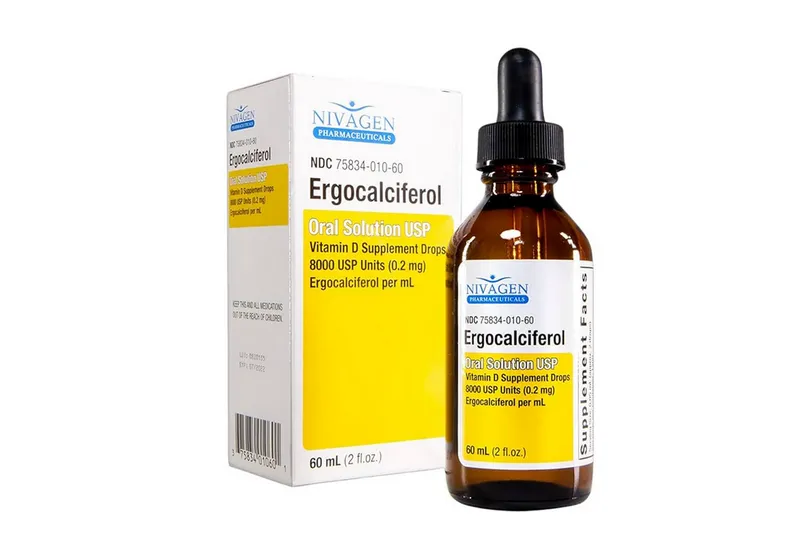
Form: Oral capsules (1.25 mg/50,000 IU), tablets (400 IU), or liquid (8,000 IU/mL) (detailed in Dosage section).
Mechanism: Increases intestinal calcium absorption and bone mineralization via vitamin D receptor activation.
Approval: FDA-approved (1930s, reformulated as Drisdol) and EMA-approved for vitamin D deficiency.
Indications and Uses of Ergocalciferol (D2)
Ergocalciferol (D2) is indicated for a variety of deficiency-related and bone health conditions, leveraging its role in calcium homeostasis:
Vitamin D Deficiency: Treats deficiency due to inadequate sun exposure or dietary intake, restoring serum 25-hydroxyvitamin D levels, per endocrinology guidelines, supported by clinical studies.
Rickets: Manages nutritional rickets in children, correcting bone deformities, recommended in pediatric protocols.
Osteomalacia: Treats osteomalacia in adults, improving bone strength, per osteoporosis management guidelines.
Hypoparathyroidism: Used to manage hypoparathyroidism, regulating calcium levels, with endocrinology evidence.
Chronic Kidney Disease (CKD): Investigated off-label to support bone health in CKD, reducing secondary hyperparathyroidism, supported by nephrology research.
Malabsorption Syndromes: Treats vitamin D deficiency in celiac disease or Crohn’s disease, enhancing absorption, with gastroenterology data.
Osteoporosis Prevention: Explored off-label to prevent bone loss in postmenopausal women, improving bone density, per orthopedic studies.
Psoriasis: Used off-label in topical or oral forms to reduce skin lesions, with dermatology evidence.
Multiple Sclerosis (MS): Investigated off-label to modulate immune response in MS, improving neurological outcomes, with neurology research.
Pregnancy-Related Deficiency: Managed off-label in pregnant women with low vitamin D, supporting fetal bone development, with obstetric data.
Dosage of Ergocalciferol (D2)
Dosage for Adults
Vitamin D Deficiency:
- Initial: 50,000 IU once weekly for 6–8 weeks, then 800–2,000 IU daily for maintenance.
Rickets or Osteomalacia:
- 50,000 IU 2–3 times weekly for 6–12 weeks, followed by 400–1,000 IU daily.
Hypoparathyroidism:
- 50,000–200,000 IU daily, titrated with calcium supplements, monitored closely.
Dosage for Children
Rickets:
- 2,000–5,000 IU daily or 50,000 IU weekly for 6–12 weeks, adjusted for age and weight.
- Maintenance: 400–1,000 IU daily, under pediatric supervision.
Vitamin D Deficiency:
- 2,000 IU daily or 50,000 IU weekly for 6 weeks, then 400–600 IU daily.
Dosage for Pregnant Women
Pregnancy Category C: 400–2,000 IU daily, with monitoring for hypercalcemia. Consult an obstetrician.
Dosage Adjustments
Renal Impairment: Reduce to 25,000 IU/week if CrCl 30–60 mL/min; avoid if CrCl <30 mL/min.
Hepatic Impairment: Mild to moderate (Child-Pugh A or B): No adjustment; severe (Child-Pugh C): Use cautiously with monitoring.
Concomitant Medications: Adjust if combined with thiazide diuretics (e.g., hydrochlorothiazide), increasing hypercalcemia risk.
Hypercalcemia: Discontinue or reduce dose if serum calcium >10.5 mg/dL.
Additional Considerations
- Take this active ingredient with a meal containing fat to enhance absorption, using a full glass of water or milk.
- Monitor 25-hydroxyvitamin D levels every 3–6 months during therapy.
How to Use Ergocalciferol (D2)
Administration:
Swallow capsules or tablets with a fatty meal; administer liquid with a dropper, mixing with food if needed.
Take at a consistent time daily, preferably with breakfast, for chronic use.
Timing: Use as prescribed, with weekly or daily dosing based on indication.
Monitoring: Watch for thirst, weakness, or signs of hypercalcemia (e.g., confusion).
Additional Tips:
- Store at 20–25°C (68–77°F), protecting from light and moisture.
- Keep out of reach of children due to overdose risk.
- Report severe fatigue, nausea, or signs of kidney stones immediately.
Contraindications for Ergocalciferol (D2)
Hypersensitivity: Patients with a known allergy to Ergocalciferol (D2) or vitamin D analogs.
Hypercalcemia: Contraindicated if serum calcium >10.5 mg/dL.
Hypervitaminosis D: Avoid in cases of vitamin D toxicity.
Severe Renal Impairment: Contraindicated if CrCl <30 mL/min due to accumulation risk.
Malabsorption with Hypercalcemia: Avoid in conditions like sarcoidosis with elevated calcium.
Warnings & Precautions for Ergocalciferol (D2)
General Warnings
Hypercalcemia: Risk of elevated calcium levels; monitor serum calcium and renal function.
Kidney Stones: Risk of nephrolithiasis with prolonged use; encourage hydration.
Hyperphosphatemia: Risk in renal impairment; check phosphate levels.
Soft Tissue Calcification: Risk of calcification in kidneys or blood vessels; assess regularly.
Vitamin D Toxicity: Risk with overdose; limit total intake from all sources.
Additional Warnings
Hypersensitivity Reactions: Rare anaphylaxis; discontinue if swelling occurs.
Cardiac Arrhythmias: Risk with hypercalcemia; monitor ECG if symptomatic.
Bone Pain: Rare paradoxical pain with excessive dosing; adjust dose.
Liver Dysfunction: Risk of altered metabolism; monitor liver enzymes.
Pregnancy Risks: Potential fetal harm with high doses; use minimal effective dose.
Use in Specific Populations
Pregnancy: Category C; avoid high doses; monitor fetal calcium levels.
Breastfeeding: Use caution; monitor infant for hypercalcemia.
Elderly: Higher risk of toxicity; start with lower doses (e.g., 400 IU).
Children: Use only under supervision; avoid excessive doses.
Renal/Hepatic Impairment: Adjust dose; avoid in severe cases.
Additional Precautions
- Inform your doctor about kidney disease, sarcoidosis, or vitamin supplement use before starting this medication.
- Avoid over-the-counter vitamin D products without medical advice.
Overdose and Management of Ergocalciferol (D2)
Overdose Symptoms
- Nausea, vomiting, or constipation.
- Severe cases: Hypercalcemia, kidney stones, or cardiac arrest.
- Thirst, confusion, or muscle weakness as early signs.
- Coma or profound dehydration with extremely high doses.
Immediate Actions
Contact the Medical Team: Seek immediate medical help.
Supportive Care: Administer IV fluids, corticosteroids (e.g., prednisone), and monitor vital signs.
Specific Treatment: No specific antidote; reduce calcium intake and enhance excretion with loop diuretics.
Monitor: Check calcium levels, kidney function, and ECG for 24–72 hours.
Additional Notes
- Overdose risk is high with cumulative dosing; store securely and limit access.
- Report persistent symptoms (e.g., severe thirst, irregular heartbeat) promptly.
Side Effects of Ergocalciferol (D2)
Common Side Effects
- Nausea (5–10%, managed with food)
- Headache (3–7%, relieved with rest)
- Weakness (2–6%, decreases with dose adjustment)
- Dry Mouth (2–5%, improved with hydration)
- Constipation (1–4%, managed with fiber)
These effects may subside with dose optimization.
Serious Side Effects
Seek immediate medical attention for:
- Metabolic: Hypercalcemia or hyperphosphatemia.
- Renal: Kidney stones or acute kidney injury.
- Cardiac: Arrhythmias or QT prolongation.
- Neurological: Confusion or lethargy.
- Allergic: Rash, angioedema, or anaphylaxis.
Additional Notes
- Regular monitoring for calcium, kidney function, and bone health is advised.
- Report any unusual symptoms (e.g., excessive thirst, bone pain) immediately to a healthcare provider.
Drug Interactions with Ergocalciferol (D2)
This active ingredient may interact with:
- Thiazide Diuretics: Increases hypercalcemia risk (e.g., hydrochlorothiazide); monitor.
- Phenytoin: Reduces vitamin D metabolism; adjust dose.
- Cholestyramine: Decreases absorption; separate dosing by 2 hours.
- Calcium Supplements: Enhances hypercalcemia; coordinate intake.
- Anticonvulsants: Alters vitamin D levels (e.g., phenobarbital); monitor.
Action: Provide your healthcare provider with a complete list of medications.
Patient Education or Lifestyle
Medication Adherence: Take this vitamin D2 as prescribed for deficiency or bone health, following the exact schedule.
Monitoring: Report thirst, weakness, or signs of hypercalcemia immediately.
Lifestyle: Get moderate sun exposure; avoid excessive vitamin D sources.
Diet: Take with a fatty meal; limit calcium-rich foods if hypercalcemia risk is high.
Emergency Awareness: Know signs of kidney stones or cardiac issues; seek care if present.
Follow-Up: Schedule regular check-ups every 3–6 months to monitor calcium, vitamin D, and kidney health.
Pharmacokinetics of Ergocalciferol (D2)
Absorption: Fat-soluble, absorbed in the small intestine (peak at 12–24 hours); enhanced with dietary fat.
Distribution: Volume of distribution ~1 L/kg; stored in fat and muscle tissues.
Metabolism: Hepatic via 25-hydroxylase to 25-hydroxyvitamin D, then 1-alpha-hydroxylase to active 1,25-dihydroxyvitamin D.
Excretion: Primarily biliary (50% as metabolites); renal (25%); half-life 24–36 hours (active form weeks).
Half-Life: 24–36 hours for Ergocalciferol, with active metabolites lasting weeks.
Pharmacodynamics of Ergocalciferol (D2)
This drug exerts its effects by:
Binding to vitamin D receptors, upregulating calcium transport proteins in the intestine.
Regulating parathyroid hormone to maintain calcium-phosphorus balance.
Promoting bone mineralization and preventing rickets or osteomalacia.
Exhibiting dose-dependent risks of hypercalcemia and soft tissue calcification.
Storage of Ergocalciferol (D2)
- Temperature: Store at 20–25°C (68–77°F); protect from light, moisture, and heat.
- Protection: Keep in original container, away from direct sunlight and humidity.
- Safety: Store in a locked container out of reach of children and pets due to overdose potential.
- Disposal: Dispose of unused capsules per local regulations or consult a pharmacist, using drug take-back programs.
Frequently Asked Questions (FAQs)
Q: What does Ergocalciferol (D2) treat?
A: This medication treats vitamin D deficiency and bone disorders.
Q: Can this active ingredient cause high calcium?
A: Yes, hypercalcemia is a risk; monitor levels.
Q: Is Ergocalciferol (D2) safe for children?
A: Yes, with supervision for rickets treatment.
Q: How is this drug taken?
A: Orally as capsules or liquid with food, as directed.
Q: How long is Ergocalciferol (D2) treatment?
A: Varies by deficiency, often 6–12 weeks with maintenance.
Q: Can I use Ergocalciferol (D2) if pregnant?
A: Yes, with caution; consult a doctor.
Regulatory Information
This medication is approved by:
U.S. Food and Drug Administration (FDA): Approved in the 1930s (reformulated as Drisdol) for vitamin D deficiency.
European Medicines Agency (EMA): Approved for deficiency and bone disorders.
Other Agencies: Approved globally for nutritional support; consult local guidelines.
References
- U.S. Food and Drug Administration (FDA). (2023). Drisdol (Ergocalciferol) Prescribing Information.
- Official FDA documentation detailing the drug’s approved uses, dosage, and safety.
- European Medicines Agency (EMA). (2023). Ergocalciferol Summary of Product Characteristics.
- EMA’s comprehensive information on the medication’s indications and precautions in Europe.
- National Institutes of Health (NIH). (2023). Ergocalciferol: MedlinePlus Drug Information.
- NIH resource providing detailed information on the drug’s uses, side effects, and precautions.
- World Health Organization (WHO). (2023). WHO Model List of Essential Medicines: Ergocalciferol.
- WHO’s inclusion of Ergocalciferol for deficiency and bone health.
- Journal of Clinical Endocrinology & Metabolism. (2022). Ergocalciferol in Vitamin D Deficiency.
- Peer-reviewed article on Ergocalciferol efficacy (note: access may require a subscription).
