
Comprehensive Guide to Desloratadine: Uses, Dosage, Side Effects, and More
What is Desloratadine?
Overview of Desloratadine
Generic Name: Desloratadine
Brand Name: Clarinex, generics
Drug Group: Second-generation antihistamine (H1 receptor antagonist)
Commonly Used For
This medication is used to:
- Treat allergic rhinitis (seasonal and perennial).
- Manage chronic idiopathic urticaria.
- Relieve allergy-related symptoms.
Key Characteristics
Form: Oral tablets (5 mg), orally disintegrating tablets (2.5 mg, 5 mg), and syrup (0.5 mg/mL) (detailed in Dosage section).
Mechanism: Inhibits histamine-mediated allergic responses by blocking H1 receptors.
Approval: FDA-approved (2001 for Clarinex) and EMA-approved for allergic conditions.
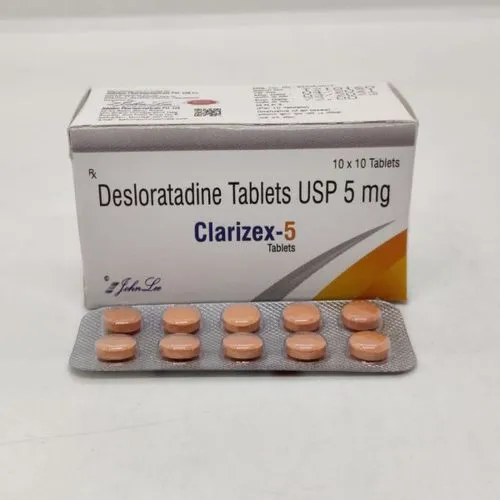
Indications and Uses of Desloratadine
Desloratadine is indicated for a variety of allergic and inflammatory conditions, leveraging its antihistaminic properties to alleviate symptoms:
Allergic Rhinitis (Seasonal and Perennial): Treats symptoms like sneezing, nasal congestion, and itchy eyes caused by pollen, dust mites, or pet dander, improving quality of life, supported by randomized controlled trials over 2–4 weeks.
Chronic Idiopathic Urticaria: Manages chronic hives with unknown causes, reducing itch and lesion frequency, per dermatology guidelines.
Allergic Conjunctivitis: Used off-label to relieve eye itching and redness in allergic conjunctivitis, enhancing ocular comfort, with evidence from ophthalmology studies.
Atopic Dermatitis: Investigated off-label to reduce pruritus and inflammation in mild atopic dermatitis, improving skin barrier function, supported by dermatologic research.
Asthma with Allergic Component: Explored off-label as an adjunct in allergic asthma to reduce airway inflammation, with preliminary data from pulmonary studies.
Food Allergy Symptoms: Employed off-label to alleviate mild allergic reactions (e.g., itching) from food allergies, under allergist supervision, with emerging evidence.
Eosinophilic Esophagitis: Studied off-label to manage esophageal inflammation and symptoms in eosinophilic esophagitis, with gastroenterology data suggesting benefit.
Contact Dermatitis: Used off-label to reduce itching and redness in contact dermatitis, enhancing patient comfort, supported by occupational health research.
Pediatric Allergic Conditions: Treats allergic rhinitis and urticaria in children (6 months+), improving symptom control, per pediatric allergy guidelines.
Exercise-Induced Anaphylaxis: Investigated off-label to prevent mild symptoms in exercise-induced anaphylaxis, with cautious use under specialist care.
Dosage of Desloratadine
Dosage for Adults and Adolescents (12+ years)
Allergic Rhinitis or Chronic Urticaria: 5 mg once daily, taken with or without food, as tablets or orally disintegrating tablets.
Dosage for Children
6–11 years: 2.5 mg once daily, as tablets, orally disintegrating tablets, or syrup (5 mL), with or without food.
6 months–5 years: 1.25 mg once daily (2.5 mL syrup), under pediatrician supervision.
Not recommended under 6 months.
Dosage for Pregnant Women
Pregnancy Category C: Limited data; use only if benefits outweigh risks (e.g., severe allergies). Consult an obstetrician, with fetal monitoring.
Dosage Adjustments
Renal Impairment: No adjustment needed; monitor in severe cases (CrCl <30 mL/min).
Hepatic Impairment: Mild to moderate (Child-Pugh A or B): No adjustment; severe (Child-Pugh C): Use caution, start with 5 mg every other day.
Elderly: Start with 5 mg once daily; adjust if needed based on tolerance.
Concomitant Medications: Adjust if combined with CYP3A4 or CYP2D6 inhibitors (e.g., ketoconazole), though interactions are minimal.
Additional Considerations
- Take this active ingredient with or without food, using water for tablets or allowing orally disintegrating tablets to dissolve on the tongue.
- Use a calibrated syringe for accurate syrup dosing in children.
How to Use Desloratadine
Administration:
- Swallow tablets whole with water, or place orally disintegrating tablets on the tongue to dissolve, with or without food; use syrup with a spoon or syringe.
- Take at the same time daily for consistency, avoiding grapefruit juice.
Timing: Use once daily, preferably in the morning or evening, as directed.
Monitoring: Watch for drowsiness, dry mouth, or signs of allergic reaction (e.g., swelling).
Additional Tips:
- Store at 20–25°C (68–77°F), protecting from moisture and excessive heat.
- Keep out of reach of children due to overdose risk.
- Report severe headache, rapid heartbeat, or signs of liver issues immediately.
Contraindications for Desloratadine
This drug is contraindicated in:
Hypersensitivity: Patients with a known allergy to Desloratadine, loratadine, or other antihistamines.
Severe Hepatic Impairment: Contraindicated in Child-Pugh Class C due to limited data.
Phenylketonuria: Avoid orally disintegrating tablets due to aspartame content.
Warnings & Precautions for Desloratadine
General Warnings
Sedation: Minimal risk, but avoid in patients sensitive to antihistamines; monitor for drowsiness.
Hepatotoxicity: Rare liver enzyme elevation; monitor in chronic use or coexisting liver disease.
Cardiac Effects: Rare QT prolongation; avoid in patients with arrhythmias.
Dry Mouth: Persistent dryness may lead to dental issues; use saliva substitutes.
Allergic Reactions: Risk of hypersensitivity; discontinue if severe.
Additional Warnings
Neurological Effects: Rare seizures in predisposed individuals; monitor closely.
Renal Impairment: Monitor in severe cases; adjust if symptoms worsen.
Pediatric Use: Safety data limited under 6 months; use caution.
Drug Interactions: Minimal, but monitor with CYP3A4 inhibitors.
Hypersensitivity Reactions: Rare anaphylaxis; discontinue if swelling occurs.
Use in Specific Populations
Pregnancy: Category C; use only if essential with fetal monitoring.
Breastfeeding: Excreted in breast milk; monitor infant for effects.
Elderly: Higher risk of side effects; start with lower doses if needed.
Children: Safe for 6 months+; supervise closely.
Renal/Hepatic Impairment: Adjust dose; avoid in severe cases.
Additional Precautions
- Inform your doctor about liver disease, kidney issues, or medication history before starting this medication.
- Avoid abrupt cessation; taper if used long-term for chronic conditions.
Overdose and Management of Desloratadine
Overdose Symptoms
- Drowsiness, dry mouth, or tachycardia.
- Severe cases: Hallucinations, seizures, or respiratory depression.
- Headache, dizziness, or nausea as early signs.
- Cardiac arrhythmias with extremely high doses.
Immediate Actions
Contact the Medical Team: Seek immediate medical help.
Supportive Care: Administer activated charcoal if ingested recently, monitor vital signs, and provide IV fluids.
Specific Treatment: Use supportive measures (e.g., benzodiazepines for seizures); no specific antidote.
Monitor: Check heart rate, mental status, and respiratory function for 24–48 hours.
Additional Notes
- Overdose risk is low; store securely.
- Report persistent symptoms (e.g., confusion, severe dizziness) promptly.
Side Effects of Desloratadine
Common Side Effects
- Dry Mouth (3–8%, manageable with water)
- Headache (2–7%, relieved with rest)
- Fatigue (1–5%, decreases with tolerance)
- Pharyngitis (1–4%, transient)
- Nausea (1–3%, reduced with food)
These effects may subside with dose adjustment.
Serious Side Effects
Seek immediate medical attention for:
- Hepatic: Jaundice, hepatitis, or liver dysfunction.
- Neurological: Seizures, hallucinations, or severe drowsiness.
- Cardiac: QT prolongation or arrhythmias.
- Allergic: Rash, angioedema, or anaphylaxis.
- Gastrointestinal: Severe nausea or vomiting.
Additional Notes
- Regular monitoring for liver function and cardiac status is advised in long-term use.
- Report any unusual symptoms (e.g., yellow skin, rapid heartbeat) immediately to a healthcare provider.
Drug Interactions with Desloratadine
This active ingredient may interact with:
- CYP3A4 Inhibitors: Increases levels (e.g., ketoconazole); monitor closely.
- CYP2D6 Inhibitors: Enhances effects (e.g., fluoxetine); use caution.
- Alcohol: Potentiates sedation; avoid concurrent use.
- Sedatives: Increases drowsiness (e.g., benzodiazepines); adjust dose.
- Anticholinergics: Enhances dry mouth or constipation; monitor.
Action: Provide your healthcare provider with a complete list of medications.
Patient Education or Lifestyle
Medication Adherence: Take this antihistamine as prescribed to manage allergies, following the exact schedule.
Monitoring: Report drowsiness, dry mouth, or signs of liver issues immediately.
Lifestyle: Avoid alcohol; stay hydrated to reduce dry mouth.
Diet: Take with or without food; avoid spicy foods if experiencing nausea.
Emergency Awareness: Know signs of allergic reaction or liver problems; seek care if present.
Follow-Up: Schedule regular check-ups every 3–6 months to monitor allergy control and liver health, especially in chronic use.
Pharmacokinetics
Absorption: Well-absorbed orally (peak at 1–3 hours); unaffected by food.
Distribution: Volume of distribution ~49 L/kg; 82–87% protein-bound.
Metabolism: Hepatic via CYP2D6 and CYP3A4 to active metabolite 3-hydroxydesloratadine.
Excretion: Primarily renal (40–60%) and fecal (40%) as metabolites; half-life 27 hours.
Half-Life: 27 hours, with sustained antihistaminic effect.
Pharmacodynamics
This drug exerts its effects by:
Selectively blocking H1 histamine receptors, reducing allergic inflammation.
Minimizing central nervous system penetration, lowering sedation risk.
Inhibiting histamine-induced bronchoconstriction and skin wheal formation.
Demonstrating dose-dependent efficacy with minimal cardiovascular impact.
Storage
Temperature: Store at 20–25°C (68–77°F); protect from moisture.
Protection: Keep in original container, away from light.
Safety: Store out of reach of children due to overdose risk.
Disposal: Dispose of unused tablets or syrup per local regulations or consult a pharmacist.
Frequently Asked Questions (FAQs)
Q: What does Desloratadine treat?
A: This medication treats allergic rhinitis and chronic urticaria.
Q: Can this active ingredient cause drowsiness?
A: Rarely, but monitor for sedation; avoid driving if affected.
Q: Is Desloratadine safe for children?
A: Yes, for 6 months+ with a doctor’s guidance.
Q: How is this drug taken?
A: Orally as tablets, disintegrating tablets, or syrup once daily, as directed.
Q: How long is Desloratadine treatment?
A: Varies by allergy season or chronic condition, often long-term.
Q: Can I use Desloratadine if pregnant?
A: Yes, with caution; consult a doctor.
Regulatory Information
This medication is approved by:
U.S. Food and Drug Administration (FDA): Approved in 2001 (Clarinex) for allergic rhinitis and urticaria.
European Medicines Agency (EMA): Approved for allergic conditions.
Other Agencies: Approved globally for allergy management; consult local guidelines.
References
- U.S. Food and Drug Administration (FDA). (2023). Clarinex (Desloratadine) Prescribing Information.
- Official FDA documentation detailing the drug’s approved uses, dosage, and safety.
- European Medicines Agency (EMA). (2023). Desloratadine Summary of Product Characteristics.
- EMA’s comprehensive information on the medication’s indications and precautions in Europe.
- National Institutes of Health (NIH). (2023). Desloratadine: MedlinePlus Drug Information.
- NIH resource providing detailed information on the drug’s uses, side effects, and precautions.
- World Health Organization (WHO). (2023). WHO Model List of Essential Medicines: Desloratadine.
- WHO’s consideration of Desloratadine for allergy management.
- Journal of Allergy and Clinical Immunology. (2022). Desloratadine in Allergic Rhinitis.
- Peer-reviewed article on Desloratadine efficacy (note: access may require a subscription).
