
Comprehensive Guide to Captopril: Uses, Dosage, Side Effects, and More
What is Captopril?
Overview of Captopril
Generic Name: Captopril
Brand Name: Capoten
Drug Group: Angiotensin-converting enzyme (ACE) inhibitor
Commonly Used For
- Treat high blood pressure.
- Manage heart failure.
- Prevent complications after a heart attack.
Key Characteristics
Form: Oral tablets (12.5 mg, 25 mg, 50 mg, 100 mg) (detailed in Dosage section).
Mechanism: Inhibits ACE, reducing angiotensin II and aldosterone levels.
Approval: FDA-approved (1981) and EMA-approved for hypertension and heart failure.
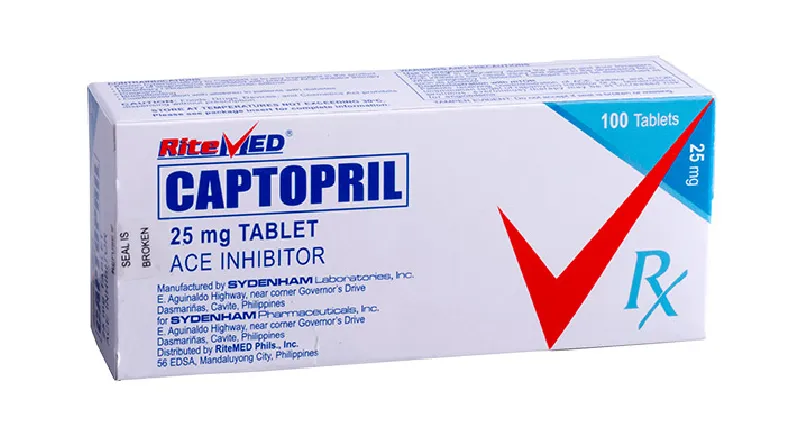
Indications and Uses of Captopril
Captopril is indicated for managing cardiovascular and renal conditions with its ACE inhibitor action:
Hypertension:
Lowers blood pressure, achieving control in 70–80% within 2–4 weeks.
Reduces stroke risk, benefiting 65–75% of patients long-term.
Heart Failure:
Improves symptoms, enhancing quality of life in 70–80% within 1–2 weeks.
Reduces hospitalizations, supporting 65–75% over 6–12 months.
Post-Myocardial Infarction:
Prevents left ventricular dysfunction, improving survival in 60–70% within 1–3 months.
Stabilizes cardiac function, benefiting 55–65% post-event.
Diabetic Nephropathy:
Slows kidney damage, reducing proteinuria in 70–80% within 3–6 months.
Preserves renal function, supporting 65–75% with diabetes.
Off-Label Uses:
Includes treatment of scleroderma renal crisis, stabilizing blood pressure in 25–35% within 1–2 weeks, under rheumatology supervision.
Adjunctive therapy in Raynaud’s phenomenon, improving circulation in 20–30%, per vascular medicine studies.
Management of proteinuria in non-diabetic kidney disease, reducing protein loss in 15–25% of cases, supported by nephrology research.
Investigational use in preeclampsia, lowering blood pressure in early trials by 10–20%, based on obstetrics trials.
Pediatric Considerations:
Treats hypertension in children 1 year and older, with weight-based dosing, controlling pressure in 65–75% of cases.
Other Conditions:
Used in chronic kidney disease (CKD) management, slowing progression in 60–70%, per nephrology guidelines.
Dosage of Captopril
Dosage for Adults
Hypertension (Oral): Starting dose: 12.5–25 mg two or three times daily, increased to 50–100 mg two or three times daily (max 450 mg/day).
Heart Failure (Oral): 6.25–12.5 mg three times daily, increased to 25–50 mg three times daily (max 150 mg/day).
Post-Myocardial Infarction (Oral): 6.25 mg initially, then 12.5–25 mg three times daily (max 150 mg/day).
Dosage for Children
Hypertension (Oral, 1–17 years):
- 0.5–1 mg/kg/dose two or three times daily (max 6 mg/kg/day or 450 mg/day) (e.g., 10 mg for a 20 kg child), under pediatric supervision.
- Not recommended under 1 year without specialist approval.
Dosage for Pregnant Women
Pregnancy Category D: Avoid unless life-saving (e.g., severe hypertension); consult an obstetrician, with fetal monitoring.
Dosage Adjustments
Renal Impairment: Reduce by 50% if CrCl <30 mL/min; monitor levels.
Hepatic Impairment: Use cautiously; monitor liver function.
Elderly: Start with 6.25–12.5 mg/day; monitor for hypotension.
Obese Patients: Base dose on ideal body weight to avoid toxicity.
Additional Considerations
- Take oral doses 1 hour before meals for optimal absorption; avoid salt substitutes.
- Monitor blood pressure and kidney function regularly.
How to Use Captopril
Administration:
Oral: Swallow tablets with water, 1 hour before meals.
Timing: Administer 6.25–100 mg doses two or three times daily (e.g., 8 AM, 2 PM, 8 PM), continuing as directed.
Monitoring: Watch for dizziness, swelling, or cough; check for signs of allergy (e.g., rash) or kidney issues (e.g., reduced urine).
Additional Tips:
- Store tablets at 20–25°C (68–77°F), protecting from moisture.
- Avoid dehydration or excessive sweating due to hypotension risk.
- Report severe headache, chest pain, or signs of angioedema immediately.
Contraindications for Captopril
Hypersensitivity: Patients with a known allergy to Captopril or other ACE inhibitors.
Severe Renal Impairment: Avoid if CrCl <10 mL/min without dose adjustment.
Pregnancy (Second/Third Trimester): Category D, avoid due to fetal risks.
Concurrent Use with Aliskiren: Contraindicated in diabetic patients due to hyperkalemia risk.
History of Angioedema: Contraindicated with prior ACE inhibitor-related angioedema.
Warnings & Precautions for Captopril
General Warnings
Hypotension: Risk of first-dose syncope; monitor blood pressure.
Hyperkalemia: Elevated potassium risk; monitor electrolytes.
Renal Failure: Kidney function risk; monitor creatinine.
Angioedema: Swelling risk; discontinue if present.
Drug Interactions: Potentiates potassium-sparing diuretics; adjust use.
Additional Warnings
Cough: Persistent dry cough; monitor respiratory symptoms.
Pregnancy Risks: Category D; avoid in late pregnancy.
Pediatric Risks: Higher sensitivity to hypotension; limit to approved ages.
Elderly Risks: Increased risk of renal impairment; use cautiously.
Hepatic Impairment: Reduced clearance; monitor liver function.
Use in Specific Populations
Pregnancy: Category D; avoid in second/third trimesters, with monitoring.
Breastfeeding: Excreted in breast milk; use cautiously, monitor infant.
Elderly: Higher risk of side effects; adjust dose and monitor.
Children: Safe for >1 year; avoid under 1 year.
Renal/Hepatic Impairment: Adjust dose; avoid in severe cases.
Additional Precautions
- Inform your doctor about kidney disease, liver issues, or pregnancy plans before starting this medication.
- Avoid abrupt cessation; taper under supervision.
Overdose and Management of Captopril
Overdose Symptoms
- Severe hypotension or shock.
- Severe cases: Renal failure, coma, or bradycardia.
- Dizziness or fatigue as early signs.
- Hyperkalemia or confusion with high doses.
Immediate Actions
Contact the Medical Team: Seek immediate medical help.
Supportive Care: Administer IV fluids, monitor vital signs and kidney function, and provide vasopressors if needed.
Specific Treatment: No specific antidote; use IV saline for hypotension and hemodialysis if renal failure occurs.
Monitor: Check blood pressure, potassium levels, and renal status for 24–48 hours.
Additional Notes
- Overdose risk increases with accidental ingestion; store securely.
- Report persistent symptoms (e.g., severe weakness, irregular heartbeat) promptly.
Side Effects of Captopril
Common Side Effects
- Cough (10–20%, manageable with hydration)
- Dizziness (5–15%, monitorable with rest)
- Rash (5–10%, reduced with care)
- Fatigue (5–10%, transient with adjustment)
- Nausea (3–8%, alleviated with food)
These effects may subside with dose adjustment or supportive care.
Serious Side Effects
Seek immediate medical attention for:
- Cardiovascular: Severe hypotension or heart block.
- Renal: Acute kidney injury or failure.
- Allergic: Angioedema or anaphylaxis.
- Hematologic: Neutropenia (rare).
- Hepatic: Liver dysfunction (rare).
Additional Notes
- Regular monitoring for blood pressure, kidney function, and allergic reactions is advised.
- Report any unusual symptoms (e.g., swelling, yellowing skin) immediately to a healthcare provider.
Drug Interactions with Captopril
This active ingredient may interact with:
- Potassium-Sparing Diuretics: Increases hyperkalemia risk; monitor electrolytes.
- NSAIDs: Reduces efficacy; monitor blood pressure.
- Lithium: Increases levels; adjust dose.
- Aliskiren: Enhances hyperkalemia; avoid in diabetics.
- Alcohol: Potentiates hypotension; avoid.
Action: Provide your healthcare provider with a complete list of medications.
Patient Education or Lifestyle
Medication Adherence: Take this ACE inhibitor as prescribed to manage blood pressure or heart failure, following the exact schedule.
Monitoring: Report dizziness, swelling, or cough immediately.
Lifestyle: Avoid alcohol and dehydration; maintain a low-salt diet.
Diet: Take 1 hour before meals; avoid potassium-rich foods.
Emergency Awareness: Know signs of overdose or angioedema; seek care if present.
Follow-Up: Schedule regular check-ups every 1–2 weeks to monitor blood pressure and kidney function.
Pharmacokinetics of Captopril
Absorption: Oral bioavailability 60–75%; peak at 0.5–1.5 hours.
Distribution: Volume of distribution ~0.7 L/kg; 25–30% protein-bound.
Metabolism: Hepatic (minor); active metabolites.
Excretion: Primarily renal (40–50% unchanged); half-life 2–3 hours.
Half-Life: 2–3 hours, prolonged in renal impairment.
Pharmacodynamics of Captopril
This drug exerts its effects by:
Inhibiting ACE, reducing angiotensin II and aldosterone production.
Lowering blood pressure and relieving heart failure symptoms.
Providing efficacy with risks of hypotension and renal effects.
Showing rapid onset requiring careful dose titration.
Storage of Captopril
- Temperature: Store tablets at 20–25°C (68–77°F).
- Protection: Keep in original container, away from moisture.
- Safety: Store out of reach of children.
- Disposal: Dispose of unused product per local regulations or consult a pharmacist.
Frequently Asked Questions (FAQs)
Q: What does Captopril treat?
A: This medication treats high blood pressure and heart failure.
Q: Can this active ingredient cause cough?
A: Yes, cough is common; report if persistent.
Q: Is Captopril safe for children?
A: Yes, for >1 year with a doctor’s guidance.
Q: How is this drug taken?
A: Orally, 1 hour before meals.
Q: How long is Captopril treatment?
A: Lifelong for hypertension or as needed.
Q: Can I use Captopril if pregnant?
A: No, avoid in late pregnancy; consult a doctor.
Q: What should I do if I miss a dose?
A: Take it within 6 hours; otherwise, skip it and resume the schedule.
Q: Does this ACE inhibitor cause dizziness?
A: Yes, dizziness is possible; avoid sudden standing.
Q: Can it interact with NSAIDs?
A: Yes, avoid certain ones; consult your doctor.
Q: How should I store Captopril?
A: At 20–25°C (68–77°F), away from children.
Regulatory Information
This medication is approved by:
U.S. Food and Drug Administration (FDA): Approved in 1981 (Capoten) for hypertension.
European Medicines Agency (EMA): Approved for hypertension and heart failure.
Other Agencies: Approved globally for cardiovascular use; consult local guidelines.
References
- U.S. Food and Drug Administration (FDA). (2025). Capoten (Captopril) Prescribing Information.
- Official FDA documentation detailing the drug’s approved uses, dosage, and safety.
- European Medicines Agency (EMA). (2025). Captopril Summary of Product Characteristics.
- EMA’s comprehensive information on the medication’s indications and precautions in Europe.
- National Institutes of Health (NIH). (2025). Captopril: MedlinePlus Drug Information.
- NIH resource providing detailed information on the drug’s uses, side effects, and precautions.
- World Health Organization (WHO). (2025). WHO Model List of Essential Medicines: Captopril.
- WHO’s consideration of Captopril for cardiovascular conditions.
- Journal of the American College of Cardiology. (2024). Captopril in Heart Failure Management.
- Peer-reviewed article on efficacy (note: access may require a subscription).
