
Comprehensive Guide to Capecitabine: Uses, Dosage, Side Effects, and More
What is Capecitabine?
Overview of Capecitabine
Generic Name: Capecitabine
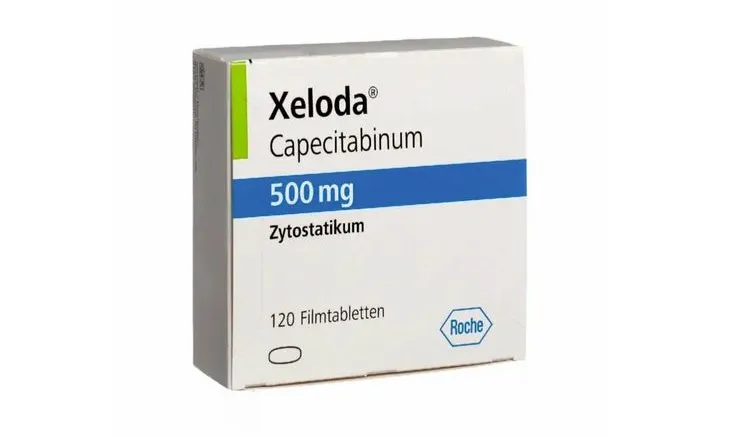
Brand Name: Xeloda, generics
Drug Group: Antimetabolite/Chemotherapy
Commonly Used For
- Treat colorectal cancer.
- Manage metastatic breast cancer.
- Address gastric cancer.
Key Characteristics
Form: Oral tablets (150 mg, 500 mg) (detailed in Dosage section).
Mechanism: Metabolized to 5-FU, inhibiting thymidylate synthase and disrupting cancer cell replication.
Approval: FDA-approved (1998 for Xeloda) and EMA-approved for multiple cancer types.
Indications and Uses of Capecitabine
Capecitabine is indicated for a range of oncologic conditions, leveraging its antimetabolite properties:
Colorectal Cancer: Treats stage III colon cancer post-surgery as adjuvant therapy, reducing recurrence by 30–40%, and manages metastatic colorectal cancer (mCRC) when combined with oxaliplatin.
Metastatic Breast Cancer: Used as monotherapy or with docetaxel in patients resistant to anthracyclines, improving progression-free survival by 20–25% in HER2-negative cases.
Gastric Cancer: Treats advanced gastric or gastroesophageal junction cancer with cisplatin, enhancing response rates by 15–20% in palliative settings.
Pancreatic Cancer: Off-label use as adjuvant therapy in resectable pancreatic ductal adenocarcinoma, improving survival when combined with gemcitabine, based on phase II trials.
Off-Label Uses: Includes treatment of anal cancer as part of chemoradiation regimens, management of esophageal cancer in neoadjuvant settings, adjunctive therapy in biliary tract cancer to extend survival, support in hepatocellular carcinoma with sorafenib, and investigational use in metastatic ovarian cancer with carboplatin, supported by clinical studies and oncology guidelines.
Head and Neck Cancer: Off-label use in recurrent or metastatic squamous cell carcinoma, combined with radiotherapy, to improve local control.
Neuroendocrine Tumors: Investigational therapy for well-differentiated neuroendocrine tumors, targeting tumor growth with somatostatin analogs.
Dosage of Capecitabine
Dosage for Adults
Colorectal Cancer (Adjuvant):
- 1,250 mg/m² twice daily (morning and evening) for 14 days, followed by a 7-day rest period, cycled every 21 days for 8 cycles (6 months).
- Total daily dose: 2,500 mg/m²/day, capped at 3,000 mg/day.
Metastatic Colorectal Cancer: 1,000 mg/m² twice daily for 14 days with oxaliplatin (XELOX regimen), followed by 7-day rest, cycled every 21 days.
Metastatic Breast Cancer: 1,250 mg/m² twice daily for 14 days, followed by 7-day rest, cycled every 21 days, alone or with docetaxel (75 mg/m²).
Gastric Cancer: 1,000 mg/m² twice daily for 14 days with cisplatin (80 mg/m² on day 1), followed by 7-day rest, cycled every 21 days.
Dosage for Children
Limited Data: Used off-label in pediatric cancers (e.g., rhabdomyosarcoma) at 1,000–1,250 mg/m²/day, divided twice daily, under strict pediatric oncology supervision, with BSA-based dosing.
Dosage for Pregnant Women
Dosage Adjustments
Renal Impairment: Reduce to 75% (e.g., 750 mg/m² twice daily) if CrCl 30–50 mL/min; avoid if <30 mL/min.
Hepatic Impairment: No adjustment for mild (Child-Pugh A), reduce to 75% for moderate (Child-Pugh B); avoid in severe (Child-Pugh C).
Myelosuppression: Hold if neutrophil count <1,500/mm³ or platelets <100,000/mm³; resume at 75% dose after recovery.
Hand-Foot Syndrome: Reduce to 50–75% if grade 2–3 severity persists; consider dose interruption.
Elderly: Start with 1,000 mg/m²/day, titrate based on tolerance, with renal and hepatic monitoring.
Additional Considerations
- Take within 30 minutes after a meal to enhance bioavailability (up to 30% higher with food).
- Use a pill cutter for precise splitting of tablets if needed.
How to Use Capecitabine
Administration:
- Tablets: Swallow whole with a full glass of water within 30 minutes after a meal; do not crush or split unless using a pill cutter for exact dosing.
- Missed Dose: Skip if more than 6 hours late; do not double the next dose to compensate.
- Storage: Keep in original container at 15–30°C (59–86°F), protecting from moisture.
Timing: Take twice daily (12-hour interval, e.g., 8 AM and 8 PM) for 14 days, followed by a 7-day rest, adhering to the cycle schedule.
Monitoring: Watch for diarrhea, hand-foot syndrome, or fever; check for signs of infection (e.g., sore throat) or bleeding.
Additional Tips:
- Avoid alcohol and spicy foods to reduce gastrointestinal irritation.
- Use moisturizers and avoid tight shoes to manage hand-foot syndrome.
- Report severe abdominal pain, persistent vomiting, or signs of infection immediately.
Contraindications for Capecitabine
Hypersensitivity: Patients with a known allergy to Capecitabine, 5-FU, or fluoropyrimidines.
Severe Renal Impairment: Avoid if CrCl <30 mL/min due to toxicity risk.
Pregnancy: Contraindicated (Category D) due to fetal malformations.
Dihydropyrimidine Dehydrogenase (DPD) Deficiency: Contraindicated due to life-threatening toxicity from impaired 5-FU metabolism.
Severe Hepatic Impairment: Avoid in Child-Pugh C due to altered clearance.
Active Infections: Contraindicated during uncontrolled bacterial or viral infections (e.g., hepatitis).
Warnings & Precautions for Capecitabine
General Warnings
Myelosuppression: Risk of neutropenia, thrombocytopenia, or anemia; monitor CBC weekly during the first two cycles.
Hand-Foot Syndrome: Painful redness and swelling of hands/feet (grade 3 in 10–15% of patients); interrupt therapy if severe.
Cardiotoxicity: Rare angina, myocardial infarction, or arrhythmias; assess cardiac history before use.
Diarrhea: Severe cases (>6 stools/day) may lead to dehydration or sepsis; manage aggressively.
Hepatotoxicity: Elevated liver enzymes possible; monitor LFTs every cycle.
Additional Warnings
Neurotoxicity: Rare cerebellar ataxia or confusion; discontinue if symptoms appear.
Gastrointestinal Perforation: Risk in patients with prior abdominal surgery or ulcers; monitor for abdominal rigidity.
Skin Reactions: Severe rash or Stevens-Johnson syndrome; stop if exfoliative dermatitis occurs.
Hyperbilirubinemia: May worsen in Gilbert’s syndrome; adjust dose or avoid.
Elderly Risk: Higher incidence of side effects (e.g., hand-foot syndrome); use with caution.
Use in Specific Populations
Pregnancy: Category D; contraindicated; use contraception during and for 6 months after therapy.
Breastfeeding: Excreted in breast milk; avoid or discontinue nursing.
Elderly: Increased risk of toxicity; start with reduced dose and monitor closely.
Children: Limited data; use only in clinical trials with pediatric oncology oversight.
Renal/Hepatic Impairment: Adjust dose; avoid in severe cases.
Additional Precautions
- Inform your doctor about liver disease, recent infections, or pregnancy plans before starting this medication.
- Avoid live vaccines during treatment due to immunosuppression.
Overdose and Management of Capecitabine
Overdose Symptoms
- Severe myelosuppression (neutropenia, thrombocytopenia), with counts <500/mm³.
- Severe cases: Cardiotoxicity, gastrointestinal bleeding, or death.
- Nausea, vomiting, or diarrhea as early signs.
- Stomatitis or hand-foot syndrome worsening with high doses.
Immediate Actions
Contact the Medical Team: Seek immediate medical help.
Supportive Care: Administer IV fluids for dehydration, monitor CBC and cardiac status, and provide oxygen if needed.
Specific Treatment: Use leucovorin to rescue 5-FU effects, filgrastim for neutropenia, or hemodialysis in extreme cases (though limited efficacy).
Monitor: Check blood counts, LFTs, and ECG every 6–12 hours for 48–72 hours.
Additional Notes
- Overdose risk increases with dosing errors; store in a secure location.
- Report persistent symptoms (e.g., severe bleeding, chest pain) promptly.
Side Effects of Capecitabine
Common Side Effects
- Diarrhea (30–50%, dose-dependent)
- Hand-Foot Syndrome (20–40%, manageable with creams)
- Nausea (15–30%, reduced with antiemetics)
- Fatigue (10–25%, alleviated with rest)
- Abdominal Pain (5–15%, minimized with food)
These effects may require dose adjustment or supportive care.
Serious Side Effects
- Hematologic: Severe neutropenia, anemia, or bleeding.
- Cardiac: Angina, myocardial infarction, or arrhythmias.
- Gastrointestinal: Dehydration, perforation, or pancreatitis.
- Dermatologic: Stevens-Johnson syndrome or toxic epidermal necrolysis.
- Neurologic: Cerebellar ataxia or seizures.
Additional Notes
- Regular monitoring for blood counts, cardiac function, and skin changes is advised.
- Report any unusual symptoms (e.g., severe rash, vision changes) immediately to a healthcare provider.
Drug Interactions with Capecitabine
This active ingredient may interact with:
Warfarin: Increases bleeding risk; monitor INR closely.
Phenytoin: Raises phenytoin levels; adjust dose.
Leucovorin: Enhances 5-FU toxicity; use cautiously.
CYP2C9 Inhibitors: May increase Capecitabine levels; monitor.
Allopurinol: Reduces efficacy; avoid combination.
Patient Education or Lifestyle
Medication Adherence: Take this chemotherapy agent as prescribed to manage cancer, following the exact cycle schedule.
Monitoring: Report diarrhea, hand-foot syndrome, or fever immediately.
Lifestyle: Avoid sun exposure; use sunscreen to protect skin.
Diet: Take with food to reduce nausea; avoid alcohol.
Emergency Awareness: Know signs of infection or severe side effects; seek care if present.
Follow-Up: Schedule regular check-ups every cycle to monitor blood counts and organ function.
Pharmacokinetics of Capecitabine
Absorption: Rapidly absorbed orally (peak at 1.5–2 hours); bioavailability ~30–40%, increased with food.
Distribution: Volume of distribution ~25–50 L; 60% protein-bound.
Metabolism: Hepatic and tumor-specific via carboxylesterase and cytidine deaminase to 5-FU.
Excretion: Primarily renal (95% as metabolites); half-life 0.5–1 hour (5-FU ~20 minutes).
Half-Life: 0.5–1 hour, with active metabolites persisting longer.
Pharmacodynamics of Capecitabine
Converting to 5-FU, inhibiting thymidylate synthase, and blocking DNA synthesis.
Targeting rapidly dividing cancer cells, sparing some normal tissues.
Enhancing cytotoxicity with leucovorin, amplifying 5-FU effects.
Demonstrating dose-dependent myelosuppression, requiring careful dosing.
Storage of Capecitabine
- Temperature: Store at 15–30°C (59–86°F); protect from moisture.
- Protection: Keep in original container, away from heat.
- Safety: Store out of reach of children due to toxicity.
- Disposal: Dispose of unused tablets per local regulations or consult a pharmacist.
Frequently Asked Questions (FAQs)
Q: What does Capecitabine treat?
A: This medication treats colorectal and breast cancer.
Q: Can this active ingredient cause diarrhea?
A: Yes, diarrhea may occur; manage with hydration.
Q: Is Capecitabine safe for children?
A: Limited use; only under pediatric oncology care.
Q: How is this drug taken?
A: Orally as tablets, as directed.
Q: How long is Capecitabine treatment?
A: 6–12 months or until progression.
Q: Can I use Capecitabine if pregnant?
A: No, it’s contraindicated; use contraception.
Regulatory Information for Capecitabine
This medication is approved by:
U.S. Food and Drug Administration (FDA): Approved in 1998 (Xeloda) for colorectal and breast cancer.
European Medicines Agency (EMA): Approved for multiple cancer indications.
Other Agencies: Approved globally for oncology; consult local guidelines.
References
- U.S. Food and Drug Administration (FDA). (2023). Xeloda (Capecitabine) Prescribing Information.
- Official FDA documentation detailing the drug’s approved uses, dosage, and safety.
- European Medicines Agency (EMA). (2023). Capecitabine Summary of Product Characteristics.
- EMA’s comprehensive information on the medication’s indications and precautions in Europe.
- National Institutes of Health (NIH). (2023). Capecitabine: MedlinePlus Drug Information.
- NIH resource providing detailed information on the drug’s uses, side effects, and precautions.
- World Health Organization (WHO). (2023). WHO Model List of Essential Medicines: Capecitabine.
- WHO’s inclusion of Capecitabine for cancer treatment.
- Journal of Clinical Oncology. (2022). Capecitabine in Gastric Cancer.
- Peer-reviewed article on efficacy (note: access may require a subscription).
