
Comprehensive Guide to Bismuth Subsalicylate: Uses, Dosage, Side Effects, and More
What is Bismuth Subsalicylate?
Overview of Bismuth Subsalicylate
Generic Name: Bismuth Subsalicylate
Brand Name: Pepto-Bismol, Kaopectate, generics
Drug Group: Antacid/Antidiarrheal
Commonly Used For
- Treat diarrhea and upset stomach.
- Relieve heartburn and indigestion.
- Manage H. pylori infections.
Key Characteristics
Form: Oral suspension (262 mg/15 mL, 524 mg/30 mL), chewable tablets (262 mg), caplets (262 mg) (detailed in Dosage section).
Mechanism: Coats the stomach lining, neutralizes acid, and exerts antimicrobial effects.
Approval: FDA-approved (over-the-counter) and EMA-approved for symptomatic relief.
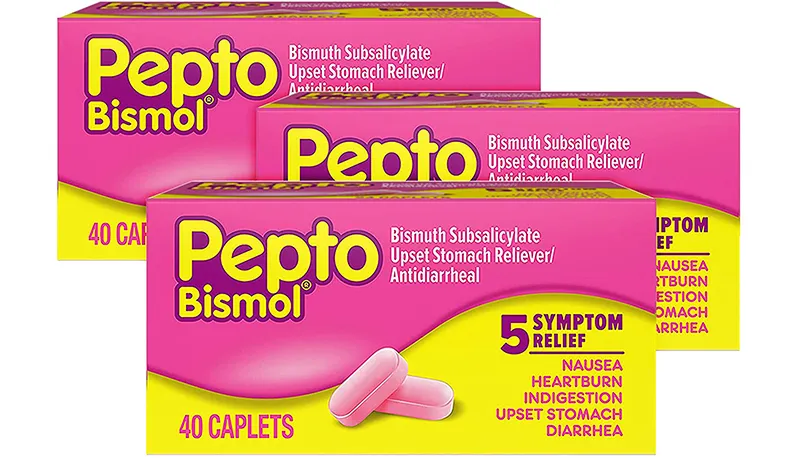
Indications and Uses of Bismuth Subsalicylate
Bismuth Subsalicylate is indicated for a range of gastrointestinal conditions, leveraging its protective and antimicrobial properties:
Acute Diarrhea: Treats non-specific diarrhea by reducing fluid secretion and binding toxins, effective for traveler’s diarrhea or viral gastroenteritis.
Heartburn and Indigestion: Relieves mild to moderate symptoms by neutralizing gastric acid and coating the esophagus, suitable for occasional use.
Helicobacter pylori Infection: Used as part of combination therapy (e.g., with antibiotics) to eradicate H. pylori in peptic ulcer disease, enhancing ulcer healing.
Mild Gastritis: Alleviates inflammation of the gastric mucosa caused by irritants or infection, providing symptomatic relief.
Off-Label Uses: Includes management of mild food poisoning to reduce toxin effects, treatment of radiation-induced diarrhea in cancer patients, and adjunctive therapy in irritable bowel syndrome (IBS) with diarrhea predominance, supported by clinical observations and studies.
Traveler’s Prophylaxis: Prevents diarrhea in high-risk travel settings when taken preemptively, under medical advice.
Mild Nausea: Relieves nausea associated with overeating or motion sickness, offering a broad-spectrum GI benefit.
Dosage of Bismuth Subsalicylate
Dosage for Adults
Acute Diarrhea:
- Oral Suspension: 30 mL (524 mg) every 30–60 minutes as needed, max 8 doses (4,192 mg) in 24 hours.
- Chewable Tablets/Caplets: 2 tablets (524 mg) every hour as needed, max 8 tablets (4,192 mg) in 24 hours.
Indigestion/Heartburn:
- Oral Suspension: 15 mL (262 mg) every 30 minutes as needed, max 8 doses (2,096 mg) in 24 hours.
- Chewable Tablets: 1 tablet (262 mg) every 30 minutes, max 8 tablets (2,096 mg) in 24 hours.
H. pylori Eradication (Triple Therapy): 525 mg twice daily for 10–14 days, combined with antibiotics, adjusted based on tolerance.
Prevention of Traveler’s Diarrhea: 525 mg twice daily during travel, max 14 days, with a 2-day break between courses.
Combination Therapy: 262 mg with antacids (e.g., calcium carbonate) for severe indigestion, not exceeding 4,192 mg/day.
Dosage for Children
6–11 years (Diarrhea/Indigestion):
- Oral Suspension: 10 mL (262 mg) every 30–60 minutes, max 6 doses (1,572 mg) in 24 hours.
- Chewable Tablets: 1 tablet (262 mg) every hour, max 6 tablets (1,572 mg) in 24 hours.
3–5 years: 5 mL (131 mg) every 30–60 minutes, max 4 doses (524 mg) in 24 hours, under pediatric supervision.
Under 3 years: Not recommended; consult a pediatrician.
Special Consideration: Adjust for low body weight, monitoring for Reye’s syndrome signs.
Dosage for Pregnant Women
Dosage Adjustments
Renal Impairment: No adjustment for mild-moderate (CrCl 30–80 mL/min); avoid if CrCl <30 mL/min due to salicylate accumulation.
Hepatic Impairment: Reduce to 262 mg every 2 hours in mild impairment; avoid in severe liver disease.
Elderly: Start with 262 mg every hour; increase cautiously to 524 mg, monitoring for tinnitus.
Concomitant Medications: Adjust if combined with other salicylates (e.g., aspirin), reducing total dose to avoid toxicity.
Additional Considerations
- Take this active ingredient as needed, shaking suspension well before use and chewing tablets thoroughly.
- Avoid exceeding 24-hour limits; consult a doctor if symptoms persist beyond 2 days.
How to Use Bismuth Subsalicylate
Administration:
- Oral Suspension: Shake well, measure with a dosing spoon or cup, and swallow without diluting; take after meals or at symptom onset.
- Chewable Tablets: Chew thoroughly before swallowing, followed by a glass of water; use dry hands to handle.
- Caplets: Swallow whole with water, avoiding crushing or splitting; take with food to reduce stomach upset.
Timing: Use every 30–60 minutes as needed, spacing doses evenly within the 24-hour limit.
Monitoring: Watch for black stools, ringing ears, or persistent vomiting; check for signs of dehydration (e.g., dry mouth).
Additional Tips:
- Store at 20–25°C (68–77°F), protecting from moisture and freezing.
- Keep in original container with child-resistant cap; dispose of unused suspension after 6 months.
- Avoid dairy products within 1 hour of dosing to prevent reduced efficacy; report severe abdominal pain immediately.
Contraindications for Bismuth Subsalicylate
Hypersensitivity: Patients with a known allergy to Bismuth Subsalicylate, salicylates (e.g., aspirin), or bismuth compounds.
Severe Renal Impairment: Contraindicated if CrCl <30 mL/min due to salicylate accumulation risk.
Active Peptic Ulcer: Avoid in active bleeding or perforation due to exacerbation risk.
Children/Teens with Viral Infections: Contraindicated in influenza or chickenpox due to Reye’s syndrome risk.
Concurrent Use with Anticoagulants: Avoid with warfarin or heparin due to increased bleeding risk.
Warnings & Precautions for Bismuth Subsalicylate
General Warnings
Salicylate Toxicity: Risk of tinnitus, hyperventilation, or metabolic acidosis with overuse; limit to 2 days unless directed.
Gastrointestinal Bleeding: Potential for occult bleeding (1–2% incidence); monitor for black stools or hematemesis.
Reye’s Syndrome: Rare but serious in children with viral infections; avoid use under 18 years in such cases.
Allergic Reactions: Cross-sensitivity with aspirin (e.g., anaphylaxis); screen for aspirin allergy.
Use in Specific Populations
- Pregnancy: Category C; use with caution and medical oversight.
- Breastfeeding: Excreted in milk; avoid or monitor infant for salicylate effects.
- Elderly: Higher risk of bleeding and toxicity; use lowest effective dose.
- Children: Limited to 3+ years; avoid in viral infections.
- Renal/Hepatic Impairment: Adjust dose in severe cases; avoid in advanced disease.
Additional Precautions
- Inform your doctor about kidney disease, bleeding disorders, or viral infections before starting this medication.
- Avoid abrupt cessation if used long-term; taper under supervision.
Overdose and Management of Bismuth Subsalicylate
Overdose Symptoms
- Salicylate toxicity (tinnitus, hyperventilation, confusion, or coma).
- Severe gastrointestinal bleeding (vomiting blood, black stools).
- Metabolic acidosis, dehydration, or electrolyte imbalance.
- Rare: Seizures or respiratory arrest in extreme cases.
Immediate Actions
Contact the Medical Team: Seek immediate medical help.
Supportive Care: Administer IV fluids for dehydration, correct acidosis with sodium bicarbonate, and monitor vital signs.
Specific Treatment: Use activated charcoal if ingestion is recent (within 1 hour), perform gastric lavage if severe, and administer vitamin K for bleeding.
Monitor: Check salicylate levels, arterial blood gases, and renal function for 24–48 hours.
Additional Notes
- Overdose risk increases with renal impairment or polypharmacy; store in a locked location.
- Report persistent symptoms (e.g., ringing ears, severe vomiting) promptly.
Side Effects of Bismuth Subsalicylate
Common Side Effects
- Black Stool (30–50%, harmless bismuth effect)
- Constipation (10–20%, managed with fiber)
- Nausea (5–15%, reduced with food)
- Dark Tongue (5–10%, temporary)
- Mild Abdominal Pain (5–10%, transient)
These effects are usually mild but require monitoring if persistent.
Serious Side Effects
Gastrointestinal: Severe abdominal pain, vomiting blood, or black tarry stools.
Neurological: Ringing ears, confusion, or seizures (salicylate toxicity).
Allergic: Rash, swelling, or difficulty breathing.
Hematologic: Unusual bleeding or bruising.
Metabolic: Rapid breathing or lethargy (acidosis).
Additional Notes
- Regular monitoring for gastrointestinal and neurological symptoms is advised.
- Report any unusual symptoms (e.g., persistent black stools, severe dizziness) immediately.
Drug Interactions with Bismuth Subsalicylate
This active ingredient may interact with:
Anticoagulants (e.g., Warfarin): Increases bleeding risk; monitor INR closely.
Methotrexate: Raises toxicity risk; avoid concurrent use.
NSAIDs (e.g., Ibuprofen): Enhances gastrointestinal irritation; use with caution.
Tetracyclines: Reduces antibiotic absorption; space doses by 2 hours.
Probenecid: Increases salicylate levels; adjust dose if combined.
Patient Education or Lifestyle
Medication Adherence: Take this antacid as needed to manage gastrointestinal symptoms, following the exact schedule.
Monitoring: Report black stools, ringing ears, or severe pain immediately.
Lifestyle: Avoid alcohol and spicy foods to reduce stomach irritation; stay hydrated.
Diet: Eat small, bland meals; avoid dairy near dosing.
Emergency Awareness: Know signs of bleeding or toxicity; seek care if present.
Follow-Up: Schedule regular check-ups if used long-term to monitor kidney function.
Pharmacokinetics of Bismuth Subsalicylate
Absorption: Partially absorbed (10–20% as salicylate); peak at 1–2 hours.
Distribution: Volume of distribution ~10 L; 90% protein-bound as salicylate.
Metabolism: Hepatic to salicylic acid, then conjugated to glucuronides.
Excretion: Primarily renal (80% as salicylate metabolites); half-life 2–4 hours.
Half-Life: 2–4 hours, prolonged in overdose or renal impairment.
Pharmacodynamics of Bismuth Subsalicylate
Coating the gastric mucosa to protect against acid and irritants.
Inhibiting prostaglandin synthesis to reduce inflammation.
Exerting antibacterial activity against H. pylori and other pathogens.
Demonstrating dose-dependent salicylate effects, risking toxicity at high doses.
Storage of Bismuth Subsalicylate
- Temperature: Store at 20–25°C (68–77°F); avoid freezing.
- Protection: Keep in original bottle, away from moisture.
- Safety: Store out of reach of children.
- Disposal: Dispose of unused suspension per local regulations or flush after expiration.
Frequently Asked Questions (FAQs)
Q: What does Bismuth Subsalicylate treat?
A: This medication treats diarrhea, indigestion, and H. pylori infections.
Q: Can this active ingredient cause black stools?
A: Yes, it’s common and harmless; consult a doctor if persistent.
Q: Is Bismuth Subsalicylate safe for children?
A: Only for 3+ years, avoiding viral infections.
Q: How is this drug taken?
A: Orally as suspension, tablets, or caplets, as directed.
Q: How long is Bismuth Subsalicylate treatment?
A: Short-term (up to 2 days) unless prescribed.
Q: Can I stop Bismuth Subsalicylate suddenly?
A: Yes, but consult a doctor if symptoms persist.
Regulatory Information
This medication is approved by:
U.S. Food and Drug Administration (FDA): Approved as over-the-counter for gastrointestinal relief.
European Medicines Agency (EMA): Approved for symptomatic relief and H. pylori therapy.
Other Agencies: Approved globally for OTC use; consult local guidelines.
References
- U.S. Food and Drug Administration (FDA). (2023). Pepto-Bismol (Bismuth Subsalicylate) Labeling.
- Official FDA documentation detailing the drug’s approved uses and safety.
- European Medicines Agency (EMA). (2023). Bismuth Subsalicylate Summary of Product Characteristics.
- EMA’s comprehensive information on the medication’s indications and precautions in Europe.
- National Institutes of Health (NIH). (2023). Bismuth Subsalicylate: MedlinePlus Drug Information.
- NIH resource providing detailed information on the drug’s uses, side effects, and precautions.
- World Health Organization (WHO). (2023). WHO Model List of Essential Medicines: Bismuth Subsalicylate.
- WHO’s consideration of Bismuth Subsalicylate for diarrhea.
- American Journal of Gastroenterology. (2022). Bismuth Subsalicylate in H. pylori Therapy.
- Peer-reviewed article on Bismuth Subsalicylate efficacy (note: access may require a subscription).
