
Comprehensive Guide to Bicalutamide: Uses, Dosage, Side Effects, and More
What is Bicalutamide?
Overview of Bicalutamide
Generic Name: Bicalutamide
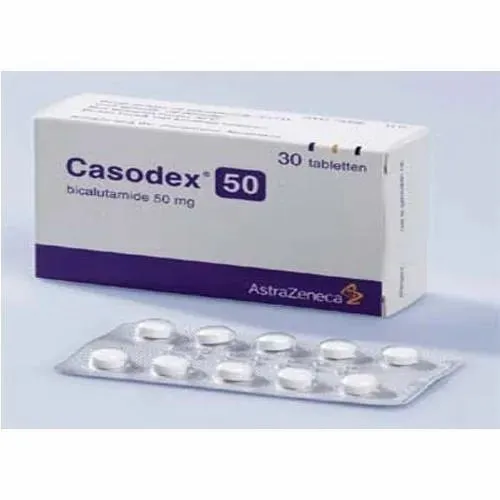
Brand Name: Casodex, generics
Drug Group: Anti-androgen (non-steroidal)
Commonly Used For
- Treat advanced prostate cancer.
- Manage hormone-sensitive prostate cancer.
- Reduce flare-ups with LHRH agonists.
Key Characteristics
Form: Oral tablets (50 mg, 150 mg) (detailed in Dosage section).
Mechanism: Antagonizes androgen receptors to inhibit testosterone effects.
Approval: FDA-approved (1995) and EMA-approved for prostate cancer.
Indications and Uses of Bicalutamide
Bicalutamide is indicated for various stages of prostate cancer and related conditions, leveraging its anti-androgenic effects:
Advanced Prostate Cancer: Treats metastatic or locally advanced prostate cancer (Stage D2) by reducing androgen-driven tumor growth, often with luteinizing hormone-releasing hormone (LHRH) agonists.
Hormone-Sensitive Prostate Cancer: Manages early-stage hormone-sensitive disease, delaying progression to castration-resistant cancer.
Adjuvant Therapy: Used post-radical prostatectomy or radiotherapy in high-risk patients to improve recurrence-free survival, supported by clinical trials.
Flare Prevention: Prevents tumor flare with GnRH agonist initiation by blocking androgen surge, enhancing initial treatment efficacy.
Off-Label Uses: Includes treatment of hirsutism in women with polycystic ovary syndrome (PCOS) to reduce excess hair growth, management of androgenetic alopecia in men as an alternative to finasteride, and palliative care in metastatic breast cancer with androgen receptor positivity, backed by limited studies.
Neoadjuvant Therapy: Reduces prostate size pre-surgery or radiation, improving surgical outcomes, based on urological research.
Transgender Hormone Therapy: Off-label use in transgender women to suppress endogenous androgens, often with estrogen, under endocrinologist guidance.
Dosage of Bicalutamide
Dosage for Adults
Advanced Prostate Cancer:
- 50 mg once daily, combined with an LHRH agonist (e.g., leuprolide), continued until disease progression or unacceptable toxicity.
- Alternative: 150 mg once daily for monotherapy in non-metastatic cases, though less common.
Hormone-Sensitive Prostate Cancer with Radiotherapy: 150 mg once daily, starting 2–4 weeks before radiotherapy and continuing for 6–36 months, tailored to risk stratification (e.g., high-risk T3/T4).
LHRH Agonist Flare Prevention: 50 mg once daily, initiated 3 days before and continued for 2–4 weeks alongside the LHRH agonist.
Combination Therapy: 50 mg with abiraterone acetate and prednisone for mCRPC, adjusting to 150 mg if PSA response is suboptimal after 12 weeks.
Off-Label (Hirsutism/Transgender): 25–50 mg once daily, titrated based on clinical response and hormone levels, under endocrinologist supervision.
Dosage for Children
Not Recommended: Safety and efficacy not established; use only in exceptional cases (e.g., precocious puberty) under pediatric endocrinology guidance, starting at 12.5–25 mg/day.
Dosage for Pregnant Women
Dosage Adjustments
Renal Impairment: No adjustment needed (excreted minimally via kidneys), but monitor for accumulation in severe cases (CrCl <30 mL/min).
Hepatic Impairment: Reduce to 50 mg every other day in moderate impairment; avoid in severe liver disease due to reduced clearance.
Elderly: Start with 50 mg once daily; increase to 150 mg if tolerated, with frequent liver checks.
Concomitant Medications: Adjust if combined with CYP3A4 inducers (e.g., rifampin), potentially increasing to 100 mg/day under monitoring.
Additional Considerations
- Take this active ingredient at the same time daily, preferably with food to improve absorption (increases bioavailability by 40%).
- Avoid crushing or splitting tablets; swallow whole to ensure consistent release.
How to Use Bicalutamide
Administration:
- Swallow tablets with a full glass of water, with or after a meal to enhance absorption and reduce gastrointestinal irritation.
- Take with an LHRH agonist if prescribed, spacing by 1–2 hours to avoid interference with hormone suppression.
- For off-label use (e.g., hirsutism), apply consistent timing with estrogen therapy if combined.
Timing: Use once daily, ideally in the morning or evening, maintaining a routine for optimal androgen suppression.
Monitoring: Watch for yellowing skin, breast changes, or bone pain; check for signs of liver dysfunction (e.g., dark urine).
Additional Tips:
- Store at 15–30°C (59–86°F), protecting from moisture and heat.
- Use a pill organizer for daily adherence, especially with long-term therapy.
- Avoid alcohol to minimize liver strain; report severe fatigue or abdominal pain immediately.
- Wear protective clothing and sunscreen due to photosensitivity risk with long-term use.
Contraindications for Bicalutamide
Hypersensitivity: Patients with a known allergy to Bicalutamide or other anti-androgens (e.g., flutamide).
Severe Hepatic Impairment: Contraindicated in Child-Pugh Class C liver disease due to reduced metabolism and toxicity risk.
Pregnancy: Category X due to teratogenic effects; not typically relevant for male patients but critical for off-label female use.
Concurrent Use with Terfenadine/Astemizole: Avoid due to potential QT prolongation risk, though these drugs are rarely used today.
Active Breast Cancer in Men: Contraindicated due to hormonal stimulation risk in rare male breast cancer cases.
Warnings & Precautions for Bicalutamide
General Warnings
Hepatotoxicity: Risk of liver injury (elevated ALT/AST in 1–2%); monitor liver function monthly for the first 6 months.
Gynecomastia/Breast Pain: Common (50–70%) due to androgen blockade; consider prophylactic radiation if severe.
Bone Density Loss: Osteoporosis risk (5–10% reduction over 2 years); supplement with calcium and vitamin D.
Cardiovascular Events: Increased risk of myocardial infarction or heart failure (2–3% in long-term use); screen for cardiac history.
Use in Specific Populations
Pregnancy: Category X; ensure contraception in off-label female use.
Breastfeeding: Excreted in milk; avoid or discontinue breastfeeding.
Elderly: Higher risk of falls from bone loss; use lowest effective dose.
Children: Not recommended; monitor growth if used off-label.
Renal/Hepatic Impairment: Adjust dose in hepatic cases; avoid in severe liver disease.
Additional Precautions
- Inform your doctor about liver disease, diabetes, or prior cardiovascular events before starting this medication.
- Avoid abrupt cessation; taper if discontinuing long-term therapy.
Overdose and Management of Bicalutamide
Overdose Symptoms
Nausea, vomiting, or abdominal pain from gastrointestinal irritation.
Severe cases: Hepatotoxicity (jaundice, coagulopathy), gynecomastia exacerbation, or hypotension.
Rare: Seizures or altered mental status due to metabolic disturbances.
Accidental ingestion: Increased androgen blockade effects (e.g., fatigue, breast tenderness).
Immediate Actions
Contact the Medical Team: Seek immediate medical help.
Supportive Care: Administer activated charcoal if ingestion is recent (within 1 hour), provide IV fluids for hypotension, and monitor vital signs.
Specific Treatment: Use N-acetylcysteine for liver support if hepatotoxicity is suspected, correct electrolyte imbalances, and discontinue the drug.
Monitor: Check liver enzymes (ALT, AST), coagulation profile, and mental status for 24–48 hours; assess bone marrow function if prolonged overdose.
Additional Notes
- Overdose risk increases with polypharmacy or liver disease; store in child-resistant containers.
- Report persistent symptoms (e.g., yellow skin, severe confusion) promptly.
Side Effects of Bicalutamide
Common Side Effects
- Gynecomastia (50–70%, dose-dependent, often irreversible)
- Breast Tenderness (40–60%, manageable with pain relief)
- Hot Flashes (20–30%, reduced with hydration)
- Fatigue (15–25%, improved with rest)
- Decreased Libido (10–20%, related to androgen suppression)
These effects may persist with long-term use but can be mitigated with supportive care.
Serious Side Effects
Hepatic: Jaundice, dark urine, or severe abdominal pain (hepatotoxicity).
Cardiovascular: Chest pain, shortness of breath, or sudden weakness (myocardial infarction).
Hematologic: Easy bruising or bleeding (thrombocytopenia, rare).
Neurological: Seizures, confusion, or hallucinations (metabolic encephalopathy).
Allergic: Rash, swelling, or anaphylaxis (rare but critical).
Additional Notes
- Regular monitoring for liver function, cardiac health, and bone density is advised.
- Report any unusual symptoms (e.g., yellowing skin, severe chest pain) immediately.
Drug Interactions with Bicalutamide
This active ingredient may interact with:
CYP3A4 Inducers (e.g., Rifampin): Reduces Bicalutamide levels; monitor PSA and consider dose increase.
Warfarin: Increases bleeding risk; monitor INR weekly.
Calcium Channel Blockers (e.g., Verapamil): May enhance hypotensive effects; adjust doses if combined.
Oral Contraceptives: Reduces efficacy in off-label female use; use alternative contraception.
Statins (e.g., Simvastatin): Potential for myopathy; monitor muscle pain.
Patient Education or Lifestyle
Medication Adherence: Take this anti-androgen as prescribed to manage prostate cancer, following the exact schedule.
Monitoring: Report yellow skin, breast changes, or bone pain immediately.
Lifestyle: Avoid alcohol and smoking to protect liver health; engage in weight-bearing exercise for bones.
Diet: Maintain a balanced diet with adequate calcium; limit high-fat foods.
Emergency Awareness: Know signs of liver failure or heart attack; seek care if present.
Follow-Up: Schedule regular check-ups every 3–6 months to monitor PSA and liver function.
Pharmacokinetics of Bicalutamide
Absorption: Well-absorbed (peak at 1–2 hours); 30% bioavailability, increased with food.
Distribution: Volume of distribution ~0.5 L/kg; 96% protein-bound.
Metabolism: Hepatic via CYP3A4 to inactive metabolites.
Excretion: Primarily biliary (60%) and renal (35%) as glucuronides; half-life 5–7 days.
Half-Life: 5–7 days, with cumulative effects over weeks.
Pharmacodynamics of Bicalutamide
Competitively binding to androgen receptors, blocking testosterone and dihydrotestosterone (DHT) action.
Reducing PSA production and tumor growth in prostate cancer.
Inducing apoptosis in androgen-dependent cells, with dose-dependent receptor occupancy.
Demonstrating partial agonist activity at high doses, requiring careful monitoring.
Storage of Bicalutamide
Temperature: Store at 15–30°C (59–86°F); protect from moisture.
Protection: Keep in original container, away from light.
Safety: Store out of reach of children.
Disposal: Dispose of unused tablets per local regulations or consult a pharmacist.
Frequently Asked Questions (FAQs)
Q: What does Bicalutamide treat?
A: This medication treats prostate cancer.
Q: Can this active ingredient cause breast changes?
A: Yes, gynecomastia is common; consult a doctor.
Q: Is Bicalutamide safe for women?
A: Only off-label with strict medical supervision.
Q: How is this drug taken?
A: Orally as tablets, with food.
Q: How long is Bicalutamide treatment?
A: Long-term, often years, depending on cancer stage.
Q: Can I stop Bicalutamide suddenly?
A: No, taper off under medical guidance.
Regulatory Information
This medication is approved by:
U.S. Food and Drug Administration (FDA): Approved in 1995 (Casodex) for prostate cancer.
European Medicines Agency (EMA): Approved for advanced prostate cancer.
Other Agencies: Approved globally for oncology; consult local guidelines.
References
- U.S. Food and Drug Administration (FDA). (2023). Casodex (Bicalutamide) Prescribing Information.
- Official FDA documentation detailing the drug’s approved uses, dosage, and safety.
- European Medicines Agency (EMA). (2023). Bicalutamide Summary of Product Characteristics.
- EMA’s comprehensive information on the medication’s indications and precautions in Europe.
- National Institutes of Health (NIH). (2023). Bicalutamide: MedlinePlus Drug Information.
- NIH resource providing detailed information on the drug’s uses, side effects, and precautions.
- World Health Organization (WHO). (2023). WHO Model List of Essential Medicines: Bicalutamide.
- WHO’s consideration of Bicalutamide for prostate cancer.
- Journal of Clinical Oncology. (2022). Bicalutamide in Prostate Cancer Therapy.
- Peer-reviewed article on Bicalutamide efficacy (note: access may require a subscription).
