
Amiodarone: An Advanced Antiarrhythmic Medication
Overview
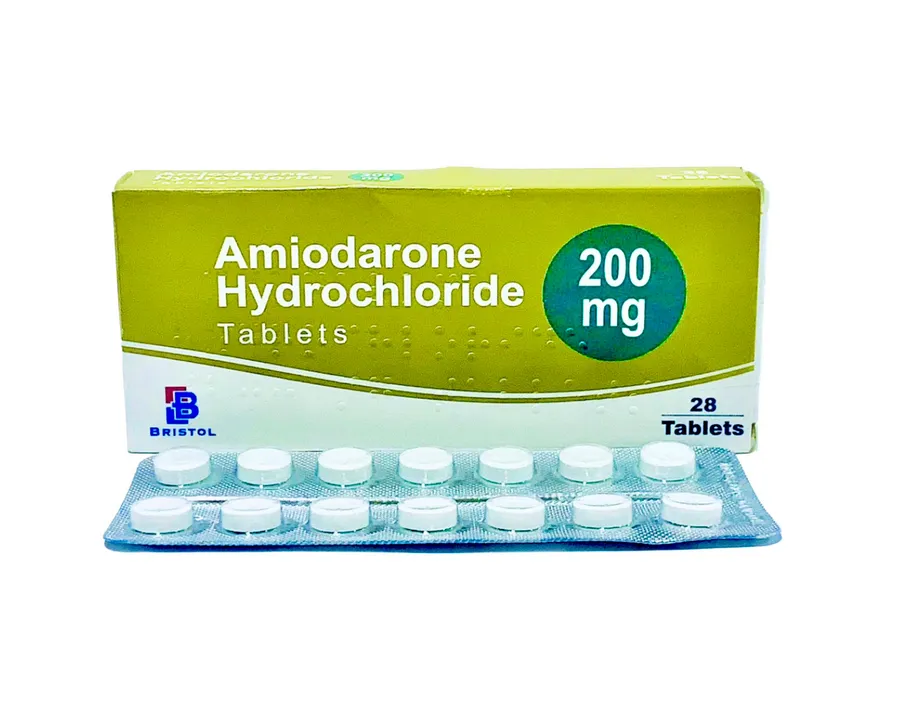
Generic name: Amiodarone
Drug class: Antiarrhythmic agent (Class III)
Available forms and strengths:
- Tablets: 100 mg, 200 mg, 400 mg
- Injection: 150 mg/3 mL
Each molecule of amiodarone hydrochloride contains approximately 37.3% iodine by weight.
Clinical Uses
1. Life-Threatening Ventricular Arrhythmias
Amiodarone is primarily indicated for the treatment and prevention of recurrent, life-threatening ventricular arrhythmias, such as:
- Ventricular fibrillation (VF) that does not respond to defibrillation or resuscitative drugs.
- Hemodynamically unstable ventricular tachycardia (VT) unresponsive to or intolerant of other antiarrhythmics.
- Adjunctive therapy during cardiopulmonary resuscitation (CPR) for refractory VF or pulseless VT following multiple unsuccessful defibrillation attempts.
It may also be used to stabilize monomorphic or polymorphic VT in patients with normal QT intervals and stable hemodynamics.
2. Secondary Prevention of Sudden Cardiac Death
Amiodarone is often prescribed for secondary prevention of cardiac arrest due to ventricular arrhythmias when standard antiarrhythmic agents fail or cannot be tolerated.
It can also be used for primary prevention of sustained VT or VF in patients with prior myocardial infarction and underlying left ventricular dysfunction.
3. Supraventricular Arrhythmias
Conversion of atrial fibrillation (AF) to normal sinus rhythm, particularly in patients with structural heart disease or left ventricular dysfunction, where other agents may be contraindicated.
Rate control in patients with AF and heart failure (without accessory pathways).
Atrial arrhythmias associated with Wolff-Parkinson-White syndrome or other pre-excitation syndromes.
Postoperative AF prophylaxis following cardiac or thoracic surgery.
Management of wide-complex tachycardia of uncertain origin, especially when ischemic heart disease or left ventricular impairment coexists.
Hypertrophic cardiomyopathy–related arrhythmias, both ventricular and supraventricular.
Mechanism of Action (Pharmacodynamics)
Amiodarone is a Class III antiarrhythmic agent with complex pharmacologic properties.
It blocks potassium channels, thereby prolonging the action potential duration and refractory period in myocardial tissue. Additionally:
- It inhibits alpha- and beta-adrenergic receptors, reducing sympathetic activity.
- It slows AV nodal conduction and suppresses automaticity in the sinus node.
- It has sodium and calcium channel blocking effects, contributing to its broad antiarrhythmic activity.
This multifaceted action makes amiodarone effective against a wide spectrum of arrhythmias but also increases the potential for toxicity and interactions.
Pharmacokinetics
Absorption
Oral absorption is slow and variable, with an average bioavailability of around 50% (range: 22–86%).
Peak plasma concentrations are typically reached within 3 to 7 hours after ingestion.
Because of its long onset of action, therapeutic effects may take 1 to 3 weeks to appear, even with loading doses.
Food enhances both the rate and extent of absorption.
Distribution
Amiodarone and its active metabolite, N-desethylamiodarone, distribute extensively into tissues including the lungs, liver, heart, skin, and adipose tissue.
It crosses the placenta and is excreted into breast milk.
Tissue concentrations often exceed plasma levels manyfold, and the drug binds to plasma proteins by approximately 96%.
Metabolism
Amiodarone undergoes extensive hepatic metabolism, mainly by CYP3A4 and CYP2C8, to its active metabolite N-desethylamiodarone, which possesses similar electrophysiological effects.
Elimination
Elimination is primarily biliary, with less than 1% excreted unchanged in the urine.
The drug and its metabolites are not dialyzable.
- IV administration: mean half-life ≈ 25 days (range 9–47 days).
- Chronic oral use: mean half-life ≈ 53 days; N-desethylamiodarone ≈ 57–61 days.
Clearance is slower in the elderly and faster in children.
Because of its long half-life, amiodarone’s effects may persist for weeks to months after discontinuation.
Drug Interactions
Amiodarone interacts with numerous medications, primarily through CYP inhibition (2C9, 2D6, 3A4) and P-glycoprotein modulation.
Given its extremely long half-life, these interactions can persist weeks after discontinuation.
1. Dangerous Combinations – Avoid Use
Drugs that prolong QT interval: Class IA (quinidine, disopyramide), Class III (sotalol, dofetilide, ibutilide), certain antibiotics (erythromycin IV, moxifloxacin), antipsychotics (ziprasidone, thioridazine), and cisapride.
→ Risk: life-threatening torsades de pointes.
Protease inhibitors, nilotinib, lumefantrine, and artemether also increase QT prolongation risk.
2. Drugs Whose Levels Increase with Amiodarone
Amiodarone can raise serum concentrations of:
- Digoxin, warfarin, beta-blockers, cyclosporine, phenytoin, fentanyl, flecainide, HMG-CoA reductase inhibitors (statins), and dabigatran.
→ Result: enhanced pharmacologic or toxic effects — monitor INR, ECG, and drug levels closely.
3. Drugs That Increase Amiodarone Levels
CYP3A4 or CYP2C8 inhibitors such as cimetidine, ciprofloxacin, azithromycin, protease inhibitors, and grapefruit juice.
→ Result: elevated amiodarone plasma levels and heightened risk of toxicity (e.g., pulmonary fibrosis, thyroid dysfunction).
4. Drugs That Decrease Amiodarone Levels
CYP inducers such as rifampin, phenytoin, carbamazepine, and barbiturates can reduce plasma concentrations and compromise antiarrhythmic efficacy.
Incompatibilities (IV Form)
IV amiodarone in 5% dextrose solution is incompatible with aminophylline, heparin sodium, sodium chloride, sodium bicarbonate, cefamandole nafate, cefazolin sodium, and mezlocillin sodium.
It should not be mixed with other drugs in the same line unless confirmed compatible.
Key Warnings and Precautions
⚠️ Important Safety Information
- Amiodarone accumulates in tissues, leading to potential long-term toxicities, including pulmonary fibrosis, thyroid dysfunction (hyper- or hypothyroidism), hepatotoxicity, and corneal microdeposits.
- Regular thyroid, liver, and pulmonary function monitoring is strongly recommended during therapy.
- Because of its prolonged half-life, any adverse effects may take weeks or months to resolve even after discontinuation.
- Use during pregnancy or breastfeeding is discouraged unless absolutely necessary due to risk of fetal and neonatal toxicity.
Amiodarone is one of the most potent and broad-spectrum antiarrhythmic drugs available. However, its complex pharmacology, slow elimination, and high potential for serious side effects demand careful dosing, long-term monitoring, and awareness of drug and food interactions.
When used judiciously under specialist supervision, it remains a cornerstone in the management of life-threatening arrhythmias resistant to other treatments.
Contraindications
Amiodarone is contraindicated in the following cases:
- Cardiogenic shock
- Severe sinus node dysfunction leading to marked sinus bradycardia (unless a temporary pacemaker is in place)
- Second- or third-degree atrioventricular (AV) block (unless a temporary pacemaker is available)
- Severe bradycardia with syncope (unless pacing support is provided)
- Thyroid dysfunction or known hypersensitivity to iodine
- Severe respiratory failure, circulatory collapse, or marked hypotension — avoid intravenous administration
- Congestive heart failure or hypertrophic cardiomyopathy — avoid IV bolus injection
Drugs that may cause torsades de pointes should not be co-administered, including:
Class IA antiarrhythmics (quinidine, disopyramide), Class III agents (sotalol, dofetilide, ibutilide), and others such as bepridil, cisapride, erythromycin IV, moxifloxacin, or sultopride.
Amiodarone is also contraindicated in patients with known hypersensitivity to any of its components.
Dosage and Administration
Adults
1. Supraventricular tachycardia, ventricular tachycardia, atrial fibrillation, or atrial flutter
Treatment should be initiated in a hospital under specialist supervision.
Oral administration:
- Start with 200 mg three times daily for one week, then 200 mg twice daily for one week.
- Maintenance dose: 200 mg once daily (or the lowest effective dose).
- High loading doses (up to 1.6 g/day for 1–3 weeks, followed by 600–800 mg/day and then 400 mg/day maintenance) are sometimes used in the U.S.
- Due to potential serious adverse effects, always use the lowest effective dose.
Intravenous infusion:
- Initial dose: 5 mg/kg over 20–120 minutes with continuous ECG monitoring.
- May follow with maintenance infusion up to 1.2 g per 24 hours, depending on response.
- For pulseless ventricular fibrillation or refractory ventricular tachycardia: inject 300 mg IV (or 5 mg/kg) rapidly, followed by an additional 150 mg if needed. Then, continue infusion at 900 mg per 24 hours.
2. Life-threatening ventricular arrhythmias
Oral loading dose:
- 800–1600 mg/day for 1–3 weeks or until adequate control is achieved.
- Gradually reduce to 600–800 mg/day for one month, then to 400–600 mg/day for maintenance (may decrease to 200 mg/day if possible).
Intravenous regimen:
- Total dose in the first 24 hours ≈ 1000 mg (individualized).
Example protocol:
- Rapid loading: 150 mg infused over 10 minutes (15 mg/min)
- Slow loading: 360 mg over 6 hours (1 mg/min)
- Maintenance: 540 mg over 18 hours (0.5 mg/min)
- Continuous infusion: 0.5 mg/min (720 mg/24h) for 2–3 weeks as needed.
- For recurrent unstable ventricular fibrillation/tachycardia, an additional 150 mg may be given over 10 minutes.
Transition from IV to oral therapy:
The oral dose depends on IV duration, total dose, and bioavailability.
| Duration of IV therapy | Daily oral starting dose |
| < 1 week | 800–1600 mg/day |
| 1–3 weeks | 600–800 mg/day |
| > 3 weeks | 400 mg/day |
Pediatric Population
Treatment must be initiated and supervised in a hospital setting.
Oral administration:
- Neonates: 5–10 mg/kg twice daily for 7–10 days, then maintenance 5–10 mg/kg/day.
- 1 month–12 years: 5–10 mg/kg (max 200 mg) twice daily for 7–10 days, then once daily (max 200 mg/day).
- 12–18 years: 200 mg three times daily for 1 week → 200 mg twice daily for 1 week → maintenance 200 mg daily (adjust as needed).
Intravenous administration:
- Neonates: 5 mg/kg over 30 minutes, repeated every 12–24 hours.
- 1 month–18 years: 5–10 mg/kg over 20 min–2 hours, then continuous infusion at 300 mcg/kg/hr, up to 1.5 mg/kg/hr (max 1.2 g/24h).
- Pulseless VT/VF unresponsive to defibrillation: 5 mg/kg IV (max 300 mg) over ≥3 minutes.
Other Populations
- Hepatic impairment: Dose reduction is recommended.
- Renal impairment: No dose adjustment necessary.
- Elderly: Use with caution — higher risk of bradycardia and conduction disturbances.
Adverse Reactions
Adverse effects are dose- and duration-dependent, and may persist for several months after discontinuation.
Serious toxicities include pulmonary toxicity, neuropathy, severe arrhythmia, thyroid dysfunction, and hepatic injury.
Common
- Tremor, fatigue, paresthesia, dizziness, nausea, vomiting, constipation, loss of appetite
- Hypotension (IV use), bradycardia, AV block, heart failure
- Photosensitivity, skin discoloration, visual disturbances
- Hypothyroidism or hyperthyroidism
- Pulmonary fibrosis or interstitial pneumonitis
Uncommon
- Headache, sleep disturbances, peripheral neuropathy, sinus bradycardia, CHF exacerbation
Rare
- Thrombocytopenia, intracranial hypertension, rash, alopecia, hepatitis, optic neuritis, anaphylaxis (IV use)
Frequency Not Known
- Torsades de pointes, pancreatitis, angioedema, severe cutaneous adverse reactions (TEN, Stevens–Johnson syndrome), delirium, parkinsonism
Precautions
General Precautions
Amiodarone has high toxicity potential and should only be used under specialist supervision in a hospital setting.
Avoid sun exposure and schedule annual ophthalmologic exams.
IV administration must be slow and preferably via a central line for repeated infusions.
Use caution in patients with:
- Heart failure, hepatic impairment, thyroid disorders, visual impairment
- Electrolyte disturbances (especially hypokalemia)
- Concomitant beta-blocker or calcium channel blocker therapy
Pregnancy
Amiodarone and its metabolite cross the placenta and may cause fetal bradycardia, thyroid dysfunction, growth retardation, or congenital goiter.
Use during pregnancy is not recommended.
Lactation
Amiodarone and its metabolites are excreted in breast milk and may cause growth retardation or thyroid effects in infants.
Breastfeeding should be discontinued if therapy is essential.
Driving and Machine Operation
Visual disturbances due to amiodarone may impair the ability to drive or operate machinery safely.
Overdose
Toxicity
Manifestations may include hypotension, severe bradycardia, AV block, QT prolongation, hepatic toxicity, or cardiogenic shock, which may be fatal.
Management
- Induce vomiting or perform gastric lavage if recent ingestion, followed by activated charcoal.
- Continuous ECG and hemodynamic monitoring.
- Bradycardia: Administer beta-adrenergic agonists (e.g., isoproterenol) or use temporary pacing.
- AV block: Temporary pacemaker.
- Hypotension: IV fluids and vasopressors (dopamine, norepinephrine).
- Hemodialysis is ineffective in removing amiodarone or its metabolites.
Missed Dose
If you miss a dose, take it as soon as you remember unless it is close to your next scheduled dose.
Do not double the dose. Continue your regular dosing schedule.
