
Comprehensive Guide to Alprazolam: Uses, Dosage, Side Effects, and More
What is Alprazolam?
Overview of Alprazolam
Generic Name: Alprazolam
Brand Name: Xanax, Xanax XR, Niravam, generics
Drug Group: Benzodiazepine; anxiolytic; sedative
Commonly Used For
- Treat generalized anxiety disorder (GAD) in adults.
- Manage panic disorder with or without agoraphobia.
- Address anxiety associated with depression (adjunctive therapy).
- Off-label uses include insomnia, premenstrual dysphoric disorder, or chemotherapy-induced nausea under specialist guidance.
Key Characteristics
Form: Oral tablets (0.25 mg, 0.5 mg, 1 mg, 2 mg); extended-release tablets (0.5 mg, 1 mg, 2 mg, 3 mg); orally disintegrating tablets (0.25 mg, 0.5 mg, 1 mg, 2 mg).
Mechanism: Enhances GABA activity at GABA-A receptors, reducing central nervous system excitability.
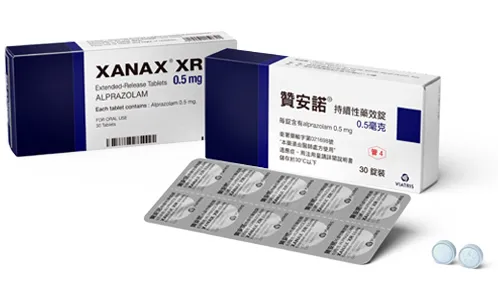
Approval: FDA-approved (1981 for Xanax) and EMA-approved for anxiety and panic disorders.
Indications and Uses of Alprazolam
Alprazolam is indicated for:
Generalized Anxiety Disorder (GAD): Relieves excessive worry and tension in adults.
Panic Disorder: Treats recurrent panic attacks, with or without agoraphobia, in adults.
Anxiety with Depression: Used adjunctively to manage anxiety symptoms in depression.
Off-Label Uses: May be prescribed for short-term insomnia, premenstrual dysphoric disorder, or nausea during chemotherapy under specialist supervision.
Dosage of Alprazolam
Dosage for Adults
Generalized Anxiety Disorder:
- Initial: 0.25–0.5 mg orally 2–3 times daily.
- Maintenance: 0.5–4 mg/day, divided into 2–3 doses.
- Maximum: 4 mg/day.
Panic Disorder:
- Immediate-Release: 0.5 mg orally 2–3 times daily, titrated to 1–10 mg/day (average 5–6 mg/day).
- Extended-Release (XR): 0.5–1 mg once daily, titrated to 3–6 mg/day.
- Maximum: 10 mg/day.
Off-Label (e.g., Insomnia): 0.25–0.5 mg at bedtime, short-term use only.
Dosage for Children
Not approved for pediatric use; limited data exist for off-label use in adolescents under specialist oversight.
Dosage for Pregnant Women
Pregnancy Category D: Positive evidence of fetal risk; avoid unless benefits outweigh risks, as benzodiazepines may cause congenital malformations. Consult a psychiatrist.
Dosage Adjustments
Renal Impairment: No specific adjustments; use cautiously due to potential accumulation.
Hepatic Impairment: Reduce dose by 50% in mild to moderate cases; avoid in severe liver disease.
Elderly: Start with 0.25 mg 2–3 times daily; maximum 2 mg/day due to increased sensitivity.
Tapering: Gradually reduce dose (e.g., 0.5 mg every 3 days) to prevent withdrawal symptoms.
Additional Considerations
- Take with or without food; food may delay absorption of immediate-release tablets.
- Avoid abrupt discontinuation to prevent withdrawal symptoms like seizures or rebound anxiety.
How to Use Alprazolam
Immediate-Release Tablets: Swallow with water, with or without food.
Extended-Release Tablets: Swallow whole; do not crush or chew.
Orally Disintegrating Tablets: Place on tongue to dissolve; no water needed.
Timing: Follow prescribed schedule (e.g., 2–3 times daily for immediate-release; once daily for XR). Consistency aids efficacy.
Missed Dose: Take as soon as remembered unless it’s nearly time for the next dose; do not double doses. Consult your doctor if multiple doses are missed.
Additional Tips:
- Avoid alcohol, as it increases sedation and overdose risk.
- Do not drive or operate machinery until you know how the drug affects you.
- Store securely to prevent misuse due to abuse potential.
Contraindications for Alprazolam
The drug is contraindicated in:
Patients with hypersensitivity to Alprazolam or other benzodiazepines.
Those with acute narrow-angle glaucoma (risk of increased intraocular pressure).
Patients with severe respiratory insufficiency or sleep apnea.
Those with severe liver disease (risk of encephalopathy).
- Patients using ketoconazole or itraconazole (significant drug interactions).
Warnings & Precautions for Alprazolam
General Warnings
Dependence and Withdrawal: High risk of physical and psychological dependence, especially with prolonged use or high doses; taper gradually.
Abuse Potential: Schedule IV controlled substance; monitor for misuse or diversion.
CNS Depression: Risk of sedation, respiratory depression, or coma, especially with opioids or alcohol.
Cognitive Impairment: May cause memory impairment or confusion, particularly in elderly patients.
Suicidal Behavior: Rare risk in patients with depression; monitor for worsening mood or suicidal thoughts.
Use in Specific Populations
Pregnancy: Category D; avoid due to risk of fetal harm, including withdrawal in newborns.
Breastfeeding: Excreted in breast milk; avoid breastfeeding to prevent infant sedation.
Elderly: Increased risk of falls, sedation, and cognitive impairment; use lowest effective dose.
Children: Not approved; safety data are limited.
Hepatic Impairment: Avoid in severe cases; reduce dose in mild to moderate impairment.
Additional Precautions
- Inform your doctor about liver disease, substance abuse history, or concurrent medications.
- Avoid combining with other CNS depressants (e.g., alcohol, opioids) due to additive effects.
Overdose and Management of Alprazolam
Overdose Symptoms
Overdose may cause:
- Severe drowsiness or coma.
- Respiratory depression or slow breathing.
- Hypotension or confusion.
- Rarely, death (especially with co-ingested substances like opioids).
Immediate Actions
Contact Emergency Services: Call 911 or seek medical help immediately.
Supportive Care: Administer flumazenil (benzodiazepine antagonist) in clinical settings; support respiration and blood pressure.
Monitor: Check vital signs, ECG, and mental status.
Additional Notes
- Overdose risk increases with alcohol or opioids; store securely to prevent misuse.
- Report any overdose symptoms promptly.
Side Effects of Alprazolam
Common Side Effects
- Drowsiness (20–40%)
- Dizziness or lightheadedness (10–20%)
- Fatigue (5–15%)
- Dry mouth (5–10%)
- Memory impairment (3–5%)
These effects are often dose-related and may decrease with time.
Serious Side Effects
Seek immediate medical attention for:
CNS Depression: Severe sedation, slow breathing, or loss of consciousness.
Allergic Reactions: Rare; rash, hives, or difficulty breathing.
Psychiatric: Worsening depression, suicidal thoughts, or agitation.
Withdrawal: Seizures, tremors, or severe anxiety upon abrupt discontinuation.
Additional Notes
- Regular monitoring for dependence and cognitive effects is essential.
- Report persistent or severe side effects to your healthcare provider.
Drug Interactions with Alprazolam
The medication may interact with:
CNS Depressants (e.g., Opioids, Alcohol): Increase risk of sedation, respiratory depression, or coma; avoid coadministration.
CYP3A4 Inhibitors (e.g., Ketoconazole, Itraconazole): Increase Alprazolam levels, risking toxicity; contraindicated.
CYP3A4 Inducers (e.g., Carbamazepine, Rifampin): Decrease Alprazolam efficacy; monitor and adjust doses.
SSRIs/SNRIs (e.g., Fluoxetine): May enhance sedation; use cautiously.
Oral Contraceptives: May increase Alprazolam levels; monitor for side effects.
Patient Education or Lifestyle
Medication Adherence: Take Alprazolam as prescribed to avoid dependence. Refill prescriptions early to avoid interruptions, but use only as directed.
Avoid Alcohol and Drugs: Do not consume alcohol or recreational drugs, as they increase sedation and overdose risk.
Monitoring: Report signs of dependence (e.g., needing higher doses) or withdrawal (e.g., anxiety, tremors) immediately.
Lifestyle: Practice stress-reduction techniques (e.g., mindfulness, therapy) to complement treatment and reduce reliance on the drug.
Driving: Avoid driving or operating machinery until you know how the medication affects you.
Emergency Awareness: Carry information about your condition and medications for emergencies.
Pharmacokinetics of Alprazolam
Absorption: Well-absorbed orally; peak plasma concentration at 1–2 hours (immediate-release) or 9 hours (extended-release).
Distribution: Volume of distribution ~0.8–1.3 L/kg; highly protein-bound (80%).
Metabolism: Hepatic, via CYP3A4 to inactive metabolites (alpha-hydroxyalprazolam, 4-hydroxyalprazolam).
Excretion: Renal (80% as metabolites); minimal unchanged drug.
Half-Life: Immediate-release: 11–16 hours; extended-release: 10–18 hours.
Pharmacodynamics of Alprazolam
The drug exerts its effects by:
Enhancing GABA-A receptor activity, increasing inhibitory neurotransmission in the brain.
Reducing anxiety and panic symptoms by calming excessive neuronal firing.
Producing sedative, anxiolytic, and muscle-relaxant effects.
Acting rapidly, making it effective for acute anxiety or panic attacks.
Storage of Alprazolam
Temperature: Store at room temperature (20–25°C or 68–77°F); avoid moisture and heat.
Protection: Keep in original container to protect from light.
Safety: Store securely in a locked container to prevent misuse or accidental ingestion, especially given abuse potential.
Disposal: Follow local regulations or consult a pharmacist for safe disposal of unused or expired medication.
Frequently Asked Questions (FAQs) About Alprazolam
Q: What does Alprazolam treat?
A: The drug treats anxiety disorders, panic disorders, and anxiety associated with depression.
Q: Can Alprazolam be used long-term?
A: No, it’s intended for short-term use due to dependence risk; consult your doctor for long-term needs.
Q: Is Alprazolam addictive?
A: Yes, it has a high potential for dependence; use only as prescribed and taper gradually.
Q: Can Alprazolam be taken with alcohol?
A: No, combining with alcohol increases sedation and overdose risk.
Q: How quickly does Alprazolam work?
A: Effects begin within 30–60 minutes for immediate-release tablets.
Regulatory Information for Alprazolam
The medication is approved by:
U.S. Food and Drug Administration (FDA): Approved in 1981 (Xanax) for anxiety and panic disorders; Schedule IV controlled substance.
European Medicines Agency (EMA): Approved for similar indications.
Other Agencies: Approved globally for equivalent uses; consult local guidelines.
References
- U.S. Food and Drug Administration (FDA). (2023). Xanax (Alprazolam) Prescribing Information.
- Official FDA documentation detailing the drug’s approved uses, dosage, and safety.
- European Medicines Agency (EMA). (2023). Alprazolam Summary of Product Characteristics.
- EMA’s comprehensive information on the medication’s indications and precautions in Europe.
- National Institutes of Health (NIH). (2023). Alprazolam: MedlinePlus Drug Information.
- NIH resource providing detailed information on the drug’s uses, side effects, and precautions.
- World Health Organization (WHO). (2023). WHO Model List of Essential Medicines: Alprazolam.
- WHO’s inclusion of Alprazolam as an essential medicine for anxiety disorders.
- American Journal of Psychiatry. (2020). Benzodiazepines in Anxiety and Panic Disorders.
- Peer-reviewed article on the efficacy of Alprazolam in anxiety (note: access may require a subscription).
