
Pituitary Tumors: What They Are and How Dangerous They Can Be
What Is the Pituitary Gland?
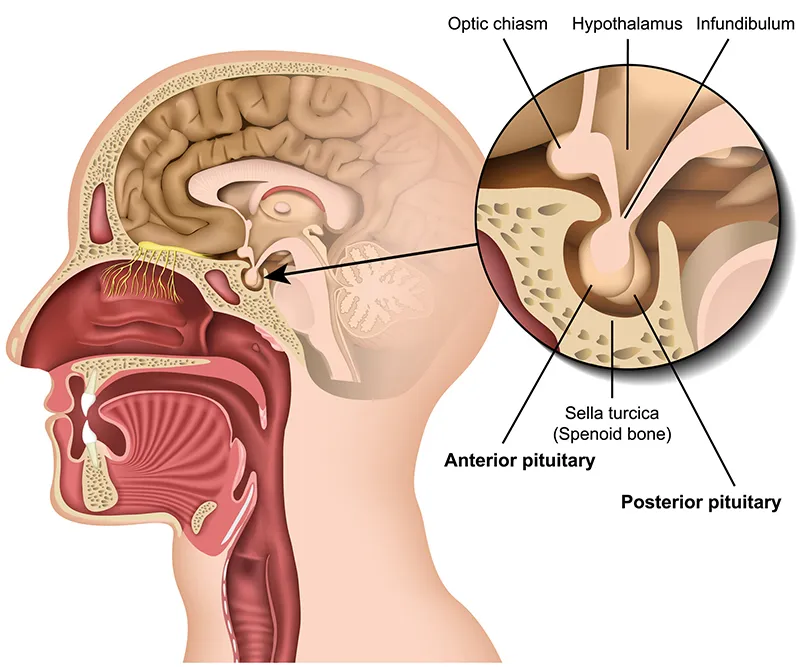
The pituitary gland is a pea-sized structure located at the base of the brain, just behind the nose, and connected to the hypothalamus. It has two distinct lobes—the anterior and posterior—that secrete different hormones essential for regulating key body functions.
Important hormones released by the pituitary include:
- Adrenocorticotropic hormone (ACTH or corticotropin): Stimulates the adrenal glands to release cortisol and aldosterone, which help regulate metabolism of carbohydrates/proteins and maintain water–sodium balance.
- Antidiuretic hormone (ADH or vasopressin): Promotes water retention by the kidneys.
- Follicle-stimulating hormone (FSH) and luteinizing hormone (LH): Control the production of sex hormones such as estrogen and testosterone.
- Growth hormone (GH): Plays a major role in metabolism and growth.
- Oxytocin: Involved in childbirth and lactation.
- Prolactin: Stimulates breast milk production.
- Thyroid-stimulating hormone (TSH): Stimulates the thyroid gland to release thyroid hormones, which regulate basal metabolism, growth, and maturation throughout the body.
What Makes Pituitary Tumors Different from Cancer?
Unlike malignant tumors, pituitary adenomas (the medical term for pituitary tumors) do not spread to other parts of the body. However, as they enlarge, they may press on nearby structures—such as the optic nerves or parts of the brain—causing headaches, vision changes, hormonal imbalances, and other symptoms.
Symptoms of Pituitary Tumors
Common Signs and Symptoms
Most pituitary tumors cause an enlargement of the pituitary gland. As the tumor grows, it may exert pressure on nearby structures—especially the optic nerves—and interfere with hormone production. Typical manifestations include:
Vision Problems
About 40%–60% of patients with pituitary tumors experience some form of visual impairment such as blurred vision or double vision. Compression of the optic chiasm (where the two optic nerves cross) can lead to visual field defects, most commonly loss of peripheral vision (bitemporal hemianopsia).
Headaches
Headache is a frequent complaint in people with pituitary tumors. It often results from pressure on adjacent tissues by a large mass. However, because headaches are common in the general population, they are not specific to pituitary tumors.
Hormone Deficiencies (Hypopituitarism)
Pituitary tumors can damage normal pituitary tissue, leading to reduced secretion of one or more hormones—a condition called hypopituitarism. Symptoms vary depending on which hormone is deficient:
- LH and FSH deficiency (hypogonadism): Low testosterone or estrogen levels may cause hot flashes and vaginal dryness in women, erectile dysfunction and reduced facial/body hair in men, mood changes, fatigue, and decreased libido.
- TSH deficiency (secondary hypothyroidism): Fatigue, constipation, slow heart rate, dry skin, swelling of hands and feet, and delayed reflexes.
- ACTH deficiency (secondary adrenal insufficiency): Low cortisol levels can result in low blood pressure, nausea, vomiting, abdominal pain, and loss of appetite.
- GH deficiency: In adults, this leads to fatigue, decreased muscle mass, and altered body composition.
Hormone Overproduction (Hypersecretion)
Some pituitary tumors produce excess hormones, leading to specific endocrine disorders:
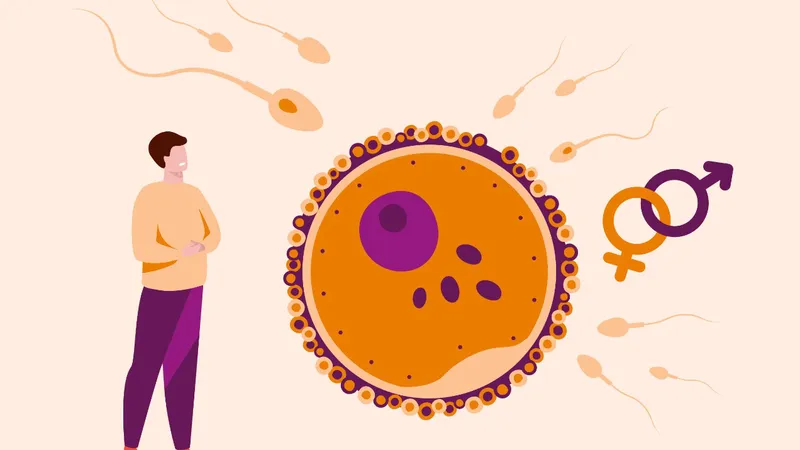
- Prolactin-secreting tumors (prolactinomas): The most common type of pituitary tumor. High prolactin levels cause infertility, irregular menstrual cycles, and milk discharge from the breasts (galactorrhea) in non-pregnant women; in men, low libido and erectile dysfunction are common.
- Somatotroph tumors: Excess growth hormone (GH) causes acromegaly, a rare but serious condition characterized by enlarged hands, feet, and facial features.
- Corticotroph tumors: Overproduction of ACTH results in Cushing’s disease, presenting with easy bruising, muscle weakness, wide purple stretch marks on the abdomen, high blood pressure, and type 2 diabetes.
- Thyrotroph tumors (rare): Excess thyroid-stimulating hormone (TSH) leads to hyperthyroidism, speeding up metabolism.
- Gonadotroph tumors: Overproduction of LH and FSH can cause irregular menstrual cycles or ovarian hyperstimulation in women; in men, it may result in enlarged testes, deeper voice, early balding at the temples, and rapid facial hair growth.
Possible Complications
If left untreated—especially in the case of large or hormone-secreting tumors—serious health problems can develop.
A rare but potentially life-threatening complication is pituitary apoplexy (hemorrhage or infarction of the tumor). This occurs when the tumor suddenly enlarges and bleeds into the pituitary or cuts off its blood supply. The larger the tumor, the greater the risk.
When to Seek Medical Care
Call emergency services and go to the hospital immediately if you experience:
- Severe, sudden-onset headache.
- Eye muscle paralysis causing double vision or inability to open the eyelid.
- Loss of peripheral vision or total vision loss in one or both eyes.
- Low blood pressure, nausea, and vomiting due to acute adrenal insufficiency.
- Sudden personality changes related to compromised blood flow in nearby brain arteries (e.g., anterior cerebral artery).
Early diagnosis and treatment by an endocrinologist or neurosurgeon can dramatically improve outcomes and prevent long-term complications.
Causes of Pituitary Tumors
Why Do Pituitary Tumors Occur?
The exact cause of most pituitary tumors remains unclear. In many cases, these tumors are thought to result from random genetic changes (mutations) in pituitary cells. Such mutations can cause the cells to grow and divide uncontrollably, leading to a mass or tumor.
Some pituitary tumors are linked to inherited (genetic) syndromes, including:
- Multiple Endocrine Neoplasia Type 1 (MEN1): A tumor-suppressor gene defect causing tumors in the parathyroid glands, pancreas, and pituitary gland.
- Multiple Endocrine Neoplasia Type 4 (MEN4): Caused by mutations in the CDKN1B gene, leading to pituitary adenomas, hyperparathyroidism, and neuroendocrine tumors in the testes or cervix.
- Carney Complex: A rare condition associated with skin pigmentation changes, myxomas, and endocrine tumors, including those in the pituitary.
- X-LAG Syndrome: An X-linked acrogigantism syndrome linked to early onset pituitary overgrowth.
- Familial pituitary tumors associated with succinate dehydrogenase mutations.
- Neurofibromatosis Type 1 (NF1): A genetic disorder involving tumors along nerves and sometimes pituitary abnormalities.
- Von Hippel–Lindau Syndrome (VHL): A condition that predisposes individuals to tumors and cysts in multiple organs, including the central nervous system.

Who Is at Risk?
Pituitary tumors can occur at any age but are most common in adults between 30 and 40 years old. Women are slightly more likely than men to develop them.
Risk Factors for Pituitary Tumors
Research suggests that certain exposures and conditions may increase the risk, such as:
- Radiation to the head or neck: Prior exposure to therapeutic or accidental radiation may raise the chance of developing a pituitary tumor.
- Pre-existing endocrine disorders: Some hormone-related conditions are associated with a higher risk.
Although having one or more risk factors increases your chances, it does not mean you will definitely develop a pituitary tumor.
Diagnosis and Treatment of Pituitary Tumors
How Are Pituitary Tumors Diagnosed?
If your doctor suspects a pituitary tumor, they will carefully review your symptoms, medical history, and perform a physical exam. Because vision problems are common with pituitary masses, an eye exam is often recommended to check for visual field defects.
Common diagnostic tests include:
- Blood tests: Measure hormone levels to assess how your pituitary gland is functioning.
- Imaging studies: Magnetic resonance imaging (MRI) or computed tomography (CT) scans of the head provide detailed pictures of the pituitary gland and surrounding structures. These scans help confirm the presence, size, and location of a tumor.
Treatment Options for Pituitary Tumors
Management depends on the type of tumor, its size, whether it is producing hormones, and the symptoms it causes.
Medications
Some drugs can shrink pituitary tumors and control hormone production. For example, dopamine agonists such as cabergoline or bromocriptine are first-line treatments for prolactin-secreting tumors (prolactinomas). In up to 80% of cases, these medications reduce tumor size and restore normal prolactin levels.
Patients with hormone deficiencies due to a tumor or its treatment may also need hormone replacement therapy (thyroid hormone, cortisol, sex hormones, or growth hormone) to restore normal body functions.
Radiation Therapy
Radiation uses high-energy X-rays to target and shrink pituitary tumors. A specialized form called stereotactic radiosurgery delivers high doses of precisely focused radiation from multiple angles, minimizing damage to nearby tissues while controlling tumor growth.
Surgery
Surgery may be recommended when:
- The tumor is large or pressing on nearby structures (such as the optic nerves).
- The tumor produces excess hormones not controlled by medication.
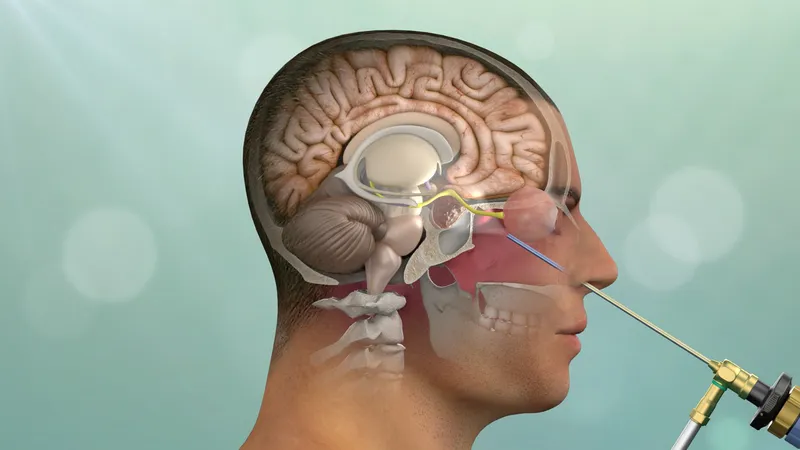
The most common surgical approach is endoscopic transnasal surgery (through the nose), which is minimally invasive. In cases of very large tumors, an open craniotomy (surgery through the skull) may be necessary to remove part or all of the pituitary gland.
Lifestyle and Prevention Tips for Pituitary Tumors
Healthy Lifestyle Habits
Although pituitary tumors cannot always be prevented, adopting healthy habits can help support treatment and recovery:
- Regular medical check-ups: Schedule periodic evaluations and imaging to monitor tumor growth and adjust treatment plans as needed.
- Light physical activity: Engage in gentle exercises such as walking, yoga, or swimming to improve overall health, circulation, and mood.
- Adequate sleep: Aim for 7–9 hours of quality sleep per night to support immune function and recovery.
- Avoid harmful substances: Refrain from alcohol, tobacco, and recreational drugs, which can interfere with hormone balance and overall health.
Balanced Nutrition
A nutritious diet supports your endocrine system and helps stabilize hormone levels:
- Eat more whole foods: Incorporate leafy greens, fresh fruits, whole grains, and lean proteins.
- Limit added sugars and refined carbs: Helps maintain stable blood sugar levels.
- Reduce sodium intake: Particularly important if you have hormone-related blood pressure changes.
- Stay hydrated: Adequate water intake supports circulation, hormone transport, and overall well-being.

Can Pituitary Tumors Be Prevented?
Currently, there is no proven way to prevent pituitary tumors. Most occur sporadically, but some are linked to rare inherited conditions. If a first-degree relative (parent or sibling) has a hereditary syndrome associated with pituitary tumors, consider genetic counseling and testing to understand your personal risk.
